

A journey back to 'old Antrim'

A NEWSPAPER archive is a remarkable thing. Those fragile pages capture the heartbeat of local life, breathing life into a fleeting far away day even as it passes.
A NEWSPAPER archive is a remarkable thing.
Those fragile pages capture the heartbeat of local life, breathing life into a fleeting far away day even as it passes.
Like the mosquito trapped in amber in Jurassic Park, old papers have the power to immortalise a moment.
This week we travel back in time to downtown Antrim in 1957, just a few years before the sleepy market town was changed forever by the arrival of Enkalon.
Many of the names will be familiar to readers of a certain age, but for those who don’t it offers a wonderful snapshot of what used to be - of ‘old Antrim’.
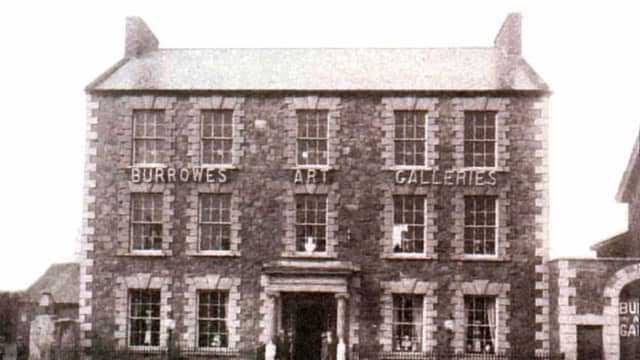
Back then there were colourful characters like William Burrowes, who ran Ulster’s oldest antiques business from an old mansion on Church Street.
By then he had been in the trade for over half a century and no-one challenged his claim that he specialised ‘in everything’.
“My father started the business in 1886 and I was brought out of school on my 14th birthday to go into it,” he said.
“I ship to Denmark, Sweden, Australia, Canada and the United States.
“The Danes are my biggest customer and I have taken a great liking to Danish antiques.
“A buyer comes over from Denmark four times a year and makes my place his headquarters!”
The antiques shop is now long gone, but the building (pictured on page 37) still stands. At one time the Antrim Guardian and a dentist operated from its upstairs rooms.
The massive stone house was built in 1837 and Mr Burrowes explained that its first owner, Campbell by name, was so stricken with asthma that he was nicknamed ‘puff’.
So when he asked Lord Massereene what he should call the building, he replied in jest ‘Castle Puff’ - and that’s what it became on the deeds.
Mr Burrowes sat on Antrim Rural Council, as did Sam Anketell, who ran a busy household goods store in the town.
And Sam had some bold ideas about the direction Antrim should be moving as it looked ahead to the 1960s.
“We are fighting hard to get the County Council to build its new headquarters in the town. Ballymena, we know, is interested too” he said.
In support of their case, the town had identified 15 aces of land near the ‘new’ Rural Council HQ at the Steeple.
“We have everything laid on there and it’s conveniently situated right beside the railway. It would be a great asset to the town.”
They also hoped that the Government would help them lure industry to a market town which had precious little of it.
“We have already furnished the Ministry with details of available sites,” he revealed.
George N Clarke, the Clerk of Petty Sessions at the Council, agreed that the town was looking to the future - while remaining mindful of its past.
He recalled vivid memories of Shane’s Castle during the war. At that time the ancient home of the O’Neill’s was the largest ammunition assembly dump in Ulster.
By 1957 the emphasis had returned to forestry and farming - and the 23-year-old Lord O’Neill made frequent trips from England to see how things were ‘shaping up’.
Both the O’Neill and Massereene families had worshipped at a time in All Saints’ Church.
The organist there was Miss Dorothy Clarke, George’s sister.
She loved her work, but confessed that promoting musical interest in the town was ‘rather uphill work’.
“People who ought to take an interest in music don’t,” she said.
“There is a much better following for plays.”
Miss Clarke once training a mill and factory choir and a Girls’ Friendly Society choir, which took part in festivals.
“They were entered eight times and won eight times,” she recalled.
But she had to step back from that when she took over the Parish organ in 1942 - and her dream of forming a choral society remained unrealised.
But some old traditions continued.
Each night at 9pm the ceremonial ringing of the ‘curfew bell’ at the Parish Church echoed around the town. In times of old it was a signal to head home and extinguish all fires - now it was ‘purely on sentimental grounds’.
“A Miss Grace Clarke - no relation - who lived at the Steeple left enough money for this to be done when she died 40-years-ago,” said Dorothy.
“The bells is rung by the sexton, Mr D Fleming.”
Near the church stood the yard which was once the headquarters of William Gaynor’s posting service.
“We have cows now where the horses stood,” said his son Henry.
But it was only when his father died in 1950 that the horses finally went.
“He wouldn’t have cars around the place. He had the last jaunting car in this part of the world.”
The two wheeled horse drawn carriages had once been ‘a great tourist attraction’ and William had ferried 1,300 people per year.
“Some of the Americans were a bit nervous because they had seen postcards of jaunting cars overturning, but the only time I ever knew anything like that to happen was when the horse ran away,” said Henry.
He added that his father was born beside Pogue’s Entry, where ‘My Lady of the Chimney Corner author Alexander Irvine was raised - and the pair had been childhood friends.
Eric Kyles, who was Antrim’s post master, said that more should be done to preserve the historic address.
“If it were in the United States it would really be made to look something,” he said.
Mr Kyle was a member of a well known sporting family and by that time he had played rugby times for the province.
“Hockey has always been the big sport here but Chimney Corner, the football team that was started a few years ago, is going great guns and is running it close. I think football will win.”
But what about rugby?
“It’s not played at the schools and there’s no demand,” he said, sadly.
So there you have it. Changed times indeed - but in some ways reassuringly familiar!