

Antrim flood study 'should be completed in 2026'
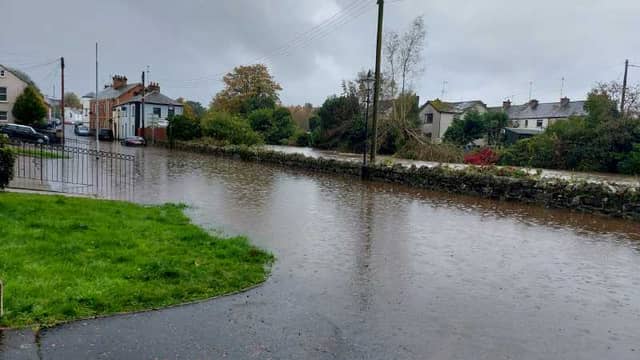

A FEASIBILITY study to assess the flood risk from the Six Mile Water River could be complete by next summer. South Antrim Alliance MLA John Blair had asked Minister for Infrastructure for an update on the feasibility study at Stormont recently.
A FEASIBILITY study to assess the flood risk from the Six Mile Water River could be complete by next summer.
South Antrim Alliance MLA John Blair had asked Minister for Infrastructure for an update on the feasibility study at Stormont recently.
Liz Kimmins replied: “Antrim has been identified as a ‘Transitional Area of Potential Significant Flood Risk’ and as a result is included on the Rivers Directorate Capital Works Programme for further investigation.
“My Department has commissioned our Partner Consultant to undertake a Feasibility Study to assess the flood risk from the Sixmilewater River to properties in Antrim, Muckamore and Dunadry and to investigate if there are any economically viable schemes to help reduce the impacts of river flooding.
“It is currently anticipated that this study should be completed by summer 2026.”
Also this week, Riverside and Massereene Street Residents Association, representing areas which have borne the brunt of flooding over many decades, has welcomed the introduction of the Water, Sustainable Drainage and Flood Management Bill as a proactive step toward addressing the increasing challenges posed by climate change, flooding, and water scarcity in Northern Ireland.
However, a spokesperson said: “Continued development near flood plains undermines the goals of the Water, Sustainable Drainage and Flood Management Bill.
“Despite promises of better flood prevention, poor planning decisions could worsen risks.
“The cumulative impact of the multiple developments along the Six Mile Water replace absorbent land with concrete, pushing more water toward existing homes.
“So even with SuDS, high-density developments can overwhelm drainage systems resulting in increased runoff and flood risk. Added to this many older neighbourhoods like Riverside and Massereene Street lack adequate drainage. The Bill focuses on new solutions and therefore does not address ageing pipes and sewers that contribute to current flooding.
“The Water, Sustainable Drainage and Flood Management Bill introduces important measures to address climate resilience and water management; however, some potential disadvantages or concerns could arise, particularly from a resident or community perspective including SuDS Adoption Costs and maintenance responsibilities.
“If Sustainable Drainage Systems (SuDS) become mandatory for new developments or retrofits, homeowners and small landlords may face high installation costs. If SuDS are not adopted by NI Water, homeowners or cash-strapped councils could be stuck with long-term maintenance costs. Who is liable if a SuDS system fails and causes property damage - NI Water, the council, or the homeowner?
“The flood protection grant scheme is positive, but if funding is limited, or implementation is slow and bureaucratic, the Bill’s long-term goals may take years to materialise, leaving many households (especially in high-risk areas such as RAMS) without adequate support and at risk in the meantime.
“RAMS Residents urge the Department to ensure community consultation and transparency is prioritised during implementation. While the Bill’s measures are promising, we seek clarity on how local input will shape guidance on SuDS design and hosepipe restrictions. Will there be opportunities for residents and associations to engage in decision-making, particularly in flood-prone areas?
“RAMS Residents Association also demand clear guarantees on SuDS maintenance funding and homeowner protections; lobby for faster, targeted investment in areas with chronic flooding; insist on transparency in how grants are allocated and equitable access to grants.
“The Homeowner Flood Protection Grant Scheme is a positive step, but we request assurances that funding will be accessible to all vulnerable households, including those in lower-income areas historically neglected in infrastructure planning.”
Meanwhile, a study commissioned by the Department for Infrastructure has recommended building a £20m flood prevention scheme in Downpatrick.
The engineers' report suggests a scheme involving culverts, embankments and pumps.