

Antrim man's ruse to escape the noose

IN life William Orr was a tall man, and in death he certainly cast a long shadow over the 1798 rebellion. The Farranshane man was subject to a trial at Carrickfergus in 1797 where he was convicted of administering the United Irishmen Oath of Allegiance.
IN life William Orr was a tall man, and in death he certainly cast a long shadow over the 1798 rebellion.
The Farranshane man was subject to a trial at Carrickfergus in 1797 where he was convicted of administering the United Irishmen Oath of Allegiance.
Later, the man whose evidence the jury relied on admitted to perjury and committed suicide.
Orr’s death represented the first United Irishman to die as a result of a crown trial making him their first martyr. The execution was widely regarded at the time to be ‘judicial murder’ and led to the rallying cry ‘Remember Orr’ during the ill-fated uprising at Antrim.
But a curious incident involving another member of the Orr clan, also sympathetic to the cause, has been largely forgotten.
John (Jackie) Orr lived at Creavery. He was a well-to-do farmer, who owned considerable property.
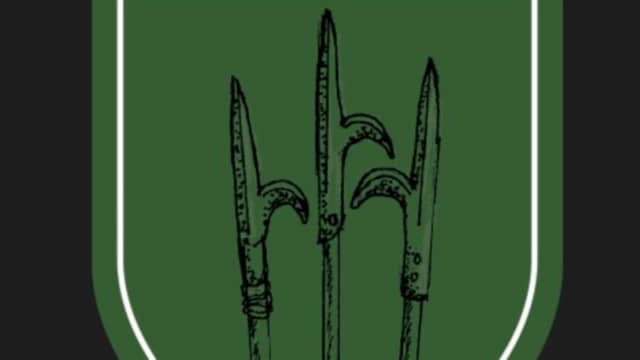
He rented a building to a blacksmith called Mullan, and at around the end of May 1798 he called by and found Mullan and his apprentice busily making pikes for the looming insurection.
After a friendly chat, he left - and spotted a large group of militia men approaching in the distance.
“If they find that pikes are being made in here they’ll burn the farm, smithy, crops and all,” he told Mullan - who responded by running off in the direction of Tullymoyle hill.
Orr was in trouble, so he decided to improvise.
He threw all the pike heads into the fire and covered them with cinders, charcoal and wood. He also tossed in his smart coat and donned the blacksmith’s apron and ‘blackened his face and arms, and thrust his face towards the flames to draw out the sweat’.
He then took to the bellows in a desperate bid to melt the pikes into a solid mass of metal.
Luckily for him, time was on his side and by the time the soldiers arrived he appeared to be quite innocently working a shapeless mass of iron.
“Well, what have you been making?” asked the militia captain as his men searched the building.
Orr stopped hammering, wiped his face and downed tools, fearful that the visitors would notice he had no idea what he was doing.
“Can’t you see?” he replied. “I’m making a long spade.”
The soldier then cut to the chase.
“Do you make pikes here?” he enquired.
“Make pikes? There’s no pikes here,” came the reply.
But the captain was persistent.
“Are you ever asked to make them?” he asked.
“Quite often, but I’m not going to put my head in the noose for other folk,” said Orr.
Laughing at the reply, the soldiers bade him farewell and left none the wiser.
A narrow escape, indeed!
As an aside, there seemed to be a disproportionate number of blacksmiths across Antrim at the end of the 18th century.
With rebellion in the air, the insurgents were frantically trying to press every able-bodied man into their service.
Blacksmiths, however, were usually excluded as they were required to shoe horses and make and mend weapons.
So if locals decided that war was not for them, when they were asked to volunteer they replied in unison that, alas, they were blacksmiths.
Who knows if that’s strictly true - but it certainly worked for John Orr!