

Antrim's flood risk is identified as 'significant'
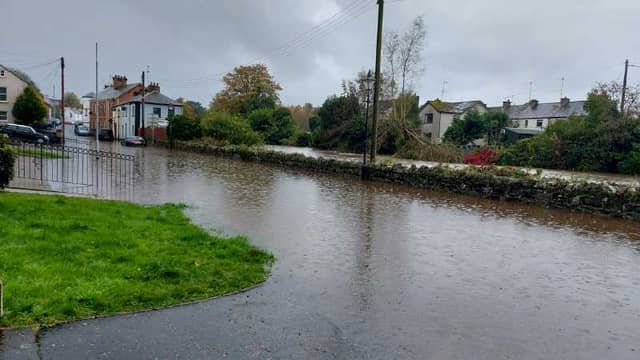

THE Infrastructure Minister John O’Dowd has confirmed that potential flooding in Antrim town is a ‘significant risk’ after residents raised concerns with a local MLA. However a feasibility study for a mitigation scheme has not yet been carried out due to Antrim’s position on the priority list, compared to other areas.
THE Infrastructure Minister John O’Dowd has confirmed that potential flooding in Antrim town is a ‘significant risk’ after residents raised concerns with a local MLA.
However a feasibility study for a mitigation scheme has not yet been carried out due to Antrim’s position on the priority list, compared to other areas.
The Minister was responding to correspondence from Alliance man John Blair, who met with residents of Riverside in early September.
Mr Blair also asked about the opening of floodgates at Toome to help alleviate the issue at times when heavy rain is forecast.
Mr O’Dowd said: “I can advise that Antrim has been identified within the Northern Ireland Flood Risk Assessment as a Transitional Area of Potential Significant Flood Risk and as a result is included on the Rivers Directorate Capital Works Programme.
“The next stage would be to undertake a Feasibility Study to assess the flood risk in the area and identify if there are any economically viable schemes to reduce the impact of flooding.
“All potential schemes on the Capital Works Programme are prioritised based on a number of criteria including, any existing level of flood protection, benefit to cost ratio and estimated delivery cost. Due to its position relative to other schemes on this prioritised list, the feasibility study for this area has not yet commenced.
“In relation to opening the Toome floodgates, my Department has the statutory obligation to regulate and control the water level in Lough Neagh within the range of 12.45m to 12.60m above the Belfast Ordnance level datum, insofar as climatic conditions allow.
“In managing the Lough water levels a range of stakeholder considerations are taken into account, including those from the fisheries, recreation, tourism and conservation sectors. However, despite the best efforts of the Department, it is not always possible to manage the water level within the statutory limits during prolonged periods of dry weather or heavy rainfall.”
Mr Blair said: “I am grateful to the Minister for responsing promptly and acknowledging that mitigating flood risk in Antrim is a priority
“Concerned by the rate of proposed development in and around town, I will be responding to Minister to ask that action is implemented as soon as possible and that and particular attention is paid to Riverside and Massereene Street areas in the first instance
“I will be writing back to ask that prioritisation of the Antrim area be sorted as soon as possible and that Massereene and Riverside get particular attention in this regard given the frequency of flooding there in recent years.”
Members of the newly formed Riverside and Massreene Street Residents’ Association met Mr Blair several weeks ago.
In November 2023, one house and a number of gardens were flooded in Riverside and Massereene Street.
The vast majority of Riverside, which only has one vehicular access point, was cut off as the roadway was submerged. There was another flood in late December, with local people saying that the incidents are increasing because of climate change and increased amounts of development further up the Six Mile Water.
The Antrim Guardian revealed last week that work has begun on a major flooding alleviation scheme just upriver, close to the new Belmont Hall development, undertaken by Antrim Construction Company.