

Antrim's mental health crisis
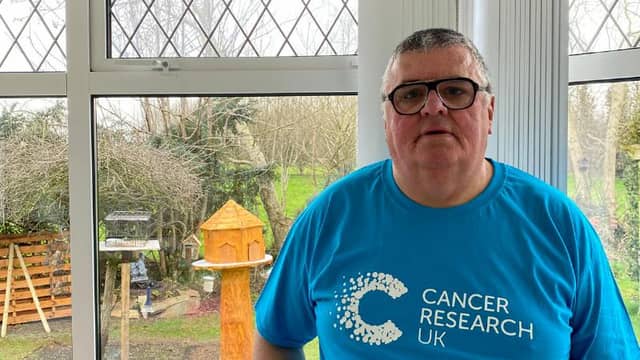

A CAREER mental health nurse from Antrim - and one-time SDLP Mayor of Antrim - has spoken about the mental health crisis plaguing the borough. Growing up in Culnafeigh Green in Antrim, which was once occupied by staff at Holywell Hospital and their families, Oran Keenan went into nursing in the 1977 and still does shifts when required.
A CAREER mental health nurse from Antrim - and one-time SDLP Mayor of Antrim - has spoken about the mental health crisis plaguing the borough.
Growing up in Culnafeigh Green in Antrim, which was once occupied by staff at Holywell Hospital and their families, Oran Keenan went into nursing in the 1977 and still does shifts when required.
His wife is a retired nurse.
Oran began as an auxiliary and went on to become a mental health nurse, specialising in rehabilitation and community care.
In the 1980s, there was a big push to get people out of institutions and into independent living.
Oran also became a co-founder of the Rehability charity in Northern Ireland and went into politics in the mid-1980s.
And Mr Keenan spoke out as another local man launched a petition to get MLAs back to work and discussing help for those struggling with their mental health.
Steve Caldwell hit the headlines recently when he said he was being forced to go private as assistance from the NHS for his anxiety was taking too long.
Mr Keenan also spoke of his experience in the Emergency Department of Antrim Area Hospital in recent weeks.
And he has warned that without massive changes, the NHS will ‘disappear’.
Speaking to the Antrim Guardian this week, he said: “The term Mental Illness or ill health seldom makes the front page or other media top stories,
“During the various adverse progressive stages of Covid, it was tripping up every politician, when they were criticising every agency involved in our provision, they were all becoming mental health champions.
“What did they achieve with all their rhetoric - 18 months to get a carport to be put up at Antrim Health Centre, which took four hours to install?
“Since the invasion of Ukraine and the knock-on impact it’s had globally on every household and lifestyle climate change and Covid has not gone away - we know.
“This has now become a nightmare for every government department, service provider, industry, down to every person entitled and willing to earn a wage, this is not a short term problem with a easy fix.
“The lay people don’t need to be hearing the elected politicians, whether in power or in opposition tearing lumps out of each other.
“Just get on with their job - the same as teachers, nurses, farmers, lorry drivers and everyone else.
“I have not included MLAs. These major events are going to have a major impact on peoples’ lifestyles.
“Mental health issues have been about for millennia, it still remains the ‘Cinderella’ of the NHS.
“The Royal College of Nursing 20 years ago advised through their projections, that a skills shortage was on its way, that’s without the help of a crystal ball.
“Mental illness is like a book of many pages, with many new pages being added down through the last century.
“Many illnesses were broken down into a new branch, like ASD, PTSD, ADHD and if general medicine can’t sort it, pass it out there.
“So as these new ailments are becoming increasingly common, the training needs to grow as well.
“Ask any relative or carer or honest nurse, can we cater for all ailments?
“The information needs to be shared as to how we can best manage.
“The managers of the NHS, whether it be at department level or discipline of health, use a lot of stats to plan.
“One in four people now have a mental health issue. In 1982 it was one in seven.
“The rising referral rate for service provision, with current resources is an other disaster waiting to occur.”
Mr Keenan said that, having had to accompany someone with a psychiatric disorder to the local Emergency Department, he saw two sides of the story.
“First contact 100%, second contact nil points.
“The second visit, the person had a few weeks ago a two week inpatient and stay in a psychiatric unit.
“We believe that when they realised is was a mental health issue, they thought ‘oh, discharge’.
“During my visits to ED, it was plain to the naked eye that there was a variety of people waiting, some on their own, some with family, some with very burly support - an eclectic mix indeed.
“A lot of worried faces, though more evident on those on their own, the young, old but most evident on those who had other special health care needs.
“Some became very restless and opinionated as to regards how the service should be managed, owing to the running commentary given to those who had to listen and the rest had no choice.”
Oran continued: “We had a new budget the other day and the current chap in that post mentioned about getting people back to work and keeping them at work.
“Well the health service could, with some training, give beneficial employment.
“I believe that the time has come for everyone who has a major health care issue should have access to a peer support group.
“These people could have a wide ranging role, offering support and facilitating a good experience, in attendance at any venue where new or important changes need to happen to improve the quality of life.”
In terms of the administration of medicine, Oran explained: “I will only single out medication.
“The person I was with is on 12 tablets in the morning, three at lunchtime and eight at night, but nine different pill boxes.
“They can’t access the Medidose system and it takes two hours to sort his meds into his own box.
“Now they have to collect their scripts, which are not always from the same supplier, then if there’s any variation in them, they are advised, cut it half or take an extra - then a process of trying to order if it’s before your allotted time.
“This person relies on friends and neighbours, our nuclear family are spread far and wide, some not so.
“There’s a need for peer support even in around the hospital, we need to see friendly faces.
“Once we all go to attend any place where we have to engage with the public we should leave our attitudes and home and put the mood swing to sleep - no one needs the grief.”
Oran said that when Covid came, former Prime Minister Boris Johnson proclaimed ‘we are all in this together’.
“We listened to the politicians expect us to follow their rules, so they should be setting a good example, though if we followed our local MLAs, a lot of people would be hungry and have no money in our pockets.
“We have well-paid managers who only see stats in front of them.
“Look at how much money people get when a good advice centre takes up their battles and can tell the people in the benefits agency exactly what the applicant is entitled to.
“For so many people who have reached the age to retire, that has paid every stamp on the National Insurance, and all their taxes - now they can’t access the very health care they paid for.
“They can’t see a health care professional or have support.
“Covid is still here and there are certain things that we need to comply with, most other home services have resumed but our health service is deciding to stay in the trenches.
“We need to see the home visits return, these have many benefits for society.
“Family, friends and neighbours could all live better, as the home visit would be noted, a wealth of knowledge can be gained, which has a far better outcome for all - certainly a lot more than a six-minute telephone call, that is if you have time to get to the phone and have a good reception.
“We spend millions on research, consulting with experts only for the report to gather dust or if a ‘suit’ does not like it, it’s shelved.”
Mr Keenan recalled his early days as a community psychiatric nurse.
“We were a new breed of nurses in the community, one of our managers produced a paper, his manager rubbished it and threw it in the bin.
“It reappeared some months later with the manager who binned it having added his name.
“Just with good fortune the author was a keen computer man and had it on a floppy disc.
“People keep calling for change, we have tried the new ways - they don’t all work.
“Let’s go back to the matron, managers who have come up through the system of junior to senior staff - they have been on the floors, can read the patient and relatives, let the staff have time for face to face conversations and better outcomes can be measured.
“For those hell-bent on going by stats - listen to the hands-on practitioner, reduce the computer time.
“These are my own opinions. It would also be appropriate to say that I have down through the years have had many a discussion, debate, difference of opinion of what is needed.
“Today’s system is not working. What if we rolled all the GPs onto a hospital site?
“Would this cut down on a lot of the red tape, the missed texts, a more joined up approach?
“Of course we would all need to look at our input, we all now know how limited resources are, we have to put aside some reserves, same as we can for special events, like Christmas, birthdays, holidays.
“The people who are on the benefits system, who receive an ill health payment, need to use it to help work it for the reason it’s allocated.
“If we don’t make massive changes , he NHS will disappear. So all those years of paying taxes will be lost.”
Just last week Steve Caldwell, a classroom assistant at Parkhall, launched a petition for accessible, affordable health care for all those dealing with mental health issues.
He said: “At least one in four of us struggle and battle with mental illness.
“NHS waiting lists to be seen and receive help are soaring-forcing us to either pay for private mental health care, or not receive help.
“Apparently mental health matters to our Stormont MLAs - so what are they doing to make mental health care accessible and affordable?
“As someone who battles crippling anxiety-and someone who pays nearly £200 per month to get help-join me in raising your voice for something to be done.
“The system that’s designed to help the broken, is breaking them further.”
Mr Caldwell has already challenged local politicians over the waits people can face for mental health support.
Steve said he is having to work two jobs to pay for private counselling, rather than wait for NHS help.
After a recent crippling episode of anxiety Steve said he was advised by his GP to go private and now pays over £200 a month.
“Not only are you really desperate to receive help, but you're constantly ruminating on how can I work enough shifts this month, how can I pay for Christmas, how can I pay for fuel, just wondering how can I afford to go for four appointments a month.
“Why does it have to be such a battle for me to get help? I think the last six weeks have been exhausting, sending emails, sending tweets, putting up Instagram posts, but why do have to go through all that to make my voice heard?”
Big-hearted Steve has featured in the Antrim Guardian over many years for his charity work.
“For a very long time I’ve lived with, wrestled with and am regularly crippled with anxiety.” he said.
“Only this summer I had another debilitating encounter with anxiety.
“Since then I’ve spoken to my doctor over the phone, and only managed to speak to someone on my local mental health team, with the help of an MLA, for 15 minutes.
“My only option was to seek private help. To see a counsellor or psychiatrist costs upwards of £40-60 for a 50 minute session per week.
“I’ve been told NHS waiting lists to see someone about my anxiety would be minimum 12-18 months. Anyone who lives with and is bullied by anxiety doesn’t want to live with it for 12-18 minutes.
“This £50 a week for a session is the minimum cost, I have also contacted several mental health private health care facilities in Belfast and been quoted £200 for an initial assessment and then £150 for subsequent appointments.
“I want to know why it takes monumental amounts of money to get help with my mental health?
“This is life for at least one in four people in the UK, of which I am one.
“I’ve long since switched off the circus up on Stormont.
“When’s the last time I’ve heard any of them speak as defiantly about mental health, as they do about all the current hot potatoes?
“Down here while all that goes on, people like me Google pretty regularly to see if they can find someone to talk to, take extra shifts or an additional job to finance that, and ask myself everyday - why does it take all this to get help?
“Unfortunately I wait with bated breath for any kind of response.
“If mental health actually does matter to all these public figures who say it does, something has got to seriously change.”
Steve has even written a poem about his ordeal, which we have printed here this week.