

Coroner assures couple that 'all relevant information' will be considered at inquest of their daughter
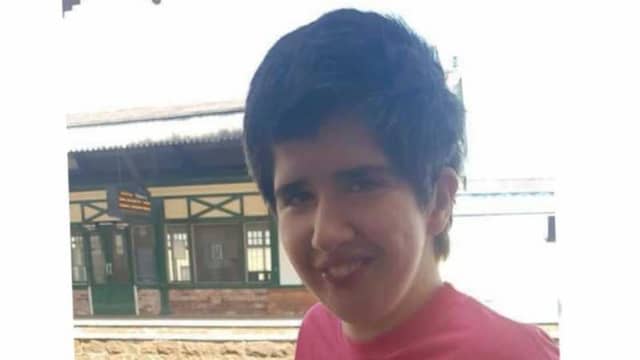

A PRELIMINARY hearing ahead of an inquest into the death of an Antrim woman who passed away in 2021 has heard the Northern Trust asked to provide all relevant documents to the court within a fortnight. Katie Ryder (25) was found in her bed at a care home in the borough - where she had not long begun spending one week out of four, to give her parents Paula and Dermod respite.
A PRELIMINARY hearing ahead of an inquest into the death of an Antrim woman who passed away in 2021 has heard the Northern Trust asked to provide all relevant documents to the court within a fortnight.
Katie Ryder (25) was found in her bed at a care home in the borough - where she had not long begun spending one week out of four, to give her parents Paula and Dermod respite.
At a preliminary hearing several months ago, it was agreed that the inquest would take place over five days, split between the first and third weeks of June.
There will also be one final preliminary hearing on May 21.
However at the hearing last Wednesday, the Coroner said that she was satisfied that the case could now be heard over four days - three in Belfast with one extra day if needed, which could potentially be hosted in Banbridge Court House, because of a lack of courtroom provision across Northern Ireland. Mr Ryder stated there could be no more appropriate place as Banbridge was his home town.
It was the first hearing that the Ryders attended in person and they were welcomed to court by the Coroner Louisa Fee. Katie had been born with a rare chromosomal abnormality, causing her to have both profound Autism and Epilepsy. These conditions brought with them a series of health problems, including the fact she would have Drop Seizures - suddenly falling with no warning.
At the hearing, Mr Ryder expressed concern about disclosure of documents from the Northern Trust, saying that ‘additional disclosure has not been provided’.
Katie died on January 31 2021 and Counsel for the Coroner said that the police attended the care home on February 3 to collect relevant records.
Mr Ryder said that some documents were provided to him by the police in the middle of April 2024.
The Coroner asked Counsel for the Trust to ensure that all relevant information was provided to the court in two weeks.
The lawyer replied that a relevant staff member of the Trust was off on leave, but the deadline of two weeks was reiterated.
There was also a question about emails between the care home and the Trust in the wake of Katie’s death and Mr Ryder also said that the inquest should be ‘Article 2 compliant’.
An Article 2 Inquest means that the state has to carry out an ‘enhanced investigation’ into the death.
Whereas a ‘traditional’, non-Article 2 inquest will look at when, where, and how a person died, an Article 2 Inquest also looks at the wider circumstances surrounding a person’s death.
The Coroner told Mr Ryder that any information that was evidentially relevant would be included in her inquest.
She said that normally, she would not consider material which related to anything after a death, adding that she could only work within her remit - to find out how someone died and in what circumstances.
“There are four standard questions to address in what circumstances a death occurred and I cannot consider items beyond my remit,” she explained.
Again, she asked the Trust’s Counsel to ensure that all information was presented to the court within two weeks.
In terms of witness statements, Counsel for the Coroner said that police statements had been submitted and said that the Next of Kin had asked if Rule 17 would be enacted. Rule 17 allows a statement to be admitted without the provider thereof being in court – to avoid wasting time for non-contentious evidence.
The Coroner said that ‘this is not a public enquiry’, reminding the Ryders that she had a number of questions to answer, rather than presiding over a ‘wider inquest’.
She did however ask Counsel for the Trust if he could ‘give some idea’ over who from the Trust would be ‘best possibly placed’ to give evidence in terms of lessons learned from the Serious Adverse Incident report, which she acknowledged was a separate process from the inquest.
She noted that it was ‘a body of evidence for me to consider’.
Counsel for the Coroner added that Dr Ronan Kilbride, a consultant neurologist, would be an expert witness.
Under the next item, the Coroner reassured the Ryders that four days would be ample time in which to conclude proceedings and she was confident that a fifth day would not be required.
Counsel for the nursing home said she had nothing to add to the proceedings.
Under Any Other Business, Mr Ryder said that he was still awaiting documents from the Trust since January, alleging that he had been told the delay was due to ‘technical difficulties’.
The Coroner reiterated that she had given the Trust two weeks in which to provide all relevant documentation, that all relevant information would be admitted to the inquest and that anything not relevant would not be included.
Speaking ahead of the proceedings two months ago, Dermod told the Antrim Guardian:
“We look forward to the inquest providing us with the answers as to how and why she died and as to how much she is missed by us and all who knew and were privileged and honoured to care for her.”
Paula added: “We also hope that anything that can be learned from our experiences can be put into policy and practice so that what happened to our family can be avoided in future for others.”