

Environmentalist and TV star Joe Mahon issues clarion call to 'save Lough Neagh'
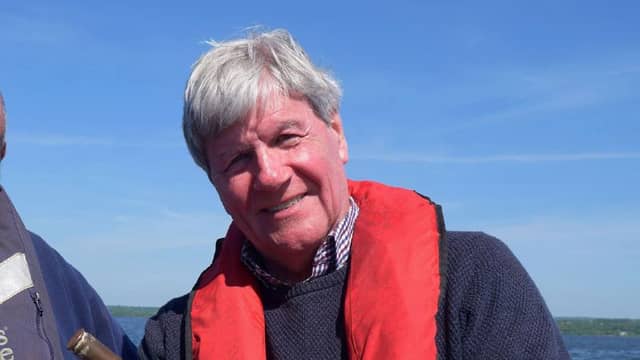

A NORTHERN Ireland TV star and environmentalist has expressed concern about the state of Lough Neagh following weeks of the water being clogged with bacteria and algae. Joe Mahon is famous for his shows celebrating Northern Ireland’s natural heritage, with programmes about Lough Neagh, Lough Foyle, Mahon’s Way, Lesser Spotted Ulster and Ulster Giants.
A NORTHERN Ireland TV star and environmentalist has expressed concern about the state of Lough Neagh following weeks of the water being clogged with bacteria and algae.
Joe Mahon is famous for his shows celebrating Northern Ireland’s natural heritage, with programmes about Lough Neagh, Lough Foyle, Mahon’s Way, Lesser Spotted Ulster and Ulster Giants.
He also recently helped Antrim and Newtownabbey Borough Council officially launch their biodiversity strategy.
He told the Antrim Guardian this week: “Like everybody else who cares for the environment, I've been reading and hearing about the distressing state of the Lough Neagh water with some alarm.
“These blue-green algae are the result of run-off from farming and industry and, of course, over-heating by the sun.
“It has to be another example of the disastrous impact of global warming. I’ve been visiting a number of rivers recently and everyone is concerned about the effects of oxygen depletion on fish life.
“We can only hope that such effects are not irreversible and double down on efforts to address the human behaviour that contributes to the worsening of the situation.”
Una Johnston from the TIDAL community group in Toome said that people visiting the area are ‘horrified’ by the state of Toome canal and the general shoreline.
The waterway was used to film key scenes for the globally-popular HBO fantasy series Game of Thrones.
“There hasn’t been one person to reach out or offer any explanation to the algae.” she said.
“All tourists and local walkers, along with their dogs are horrified and concerned because of this. Open water swimmers have not been able to continue with their swimming and the RSPB have had to redirect their projects into our community garden.”
The Six Mile Water Trust, which monitors the river which flows through the borough into the Lough, has recently written to South Antrim MP Paul Girvan on the issues of water quality.
The organisation was set up after the huge fish kill in 2008 and on pollution prevention on the Six Mile Water and its tributaries. They said: “With over ten years of tracking, and tackling pollution on the Six Mile Water and its catchments, it is obvious we as a society have been and are continuing to abuse our rivers and streams to remove waste from industrial, commercial, agricultural and domestic sources and causing untold damage to our aquatic environs, both inland and marine.
“This is well known and documented over many years and continues, at best being paid lip service on highlighted events, fish kills, dog fatalities and now ,the latest event is the massive algae bloom on Lough Neagh, the largest inland water way in the UK supplying 40% of Northern Ireland’s domestic water supply.
“So why now and what is the cause? Climatic conditions, high sunlight, water temperatures, high rainfall and calm conditions coupled with excessive enrichment built up over many years of misuse have accumulated in this very visual result of pollution.
“So who is to blame? We all are to some degree with our modern day life style of waste disposal, profiteering, overloading of existing infrastructure, lack of investment and general ignorance of the damage caused by poor practice.
“High rainfall is a contributing factor of pollution, putting extreme pressure on the existing sewage and drainage infrastructure which by its design, on failsafe discharges to the nearest water course. Coupled with Agricultural land and field run off of slurry and nitrates.
“So what can be done? Stop using our rivers and streams as part of the sewage system? Unlikely, but we can improve storm and foul separation. We can make use of proper Sustainable Urban Drainage Systems such as swales and reed beds.
“Compulsory fencing off on all Field- River margins of three metres to obtain farming subsidies.
“DFI Roads, to stop flushing road gullies directly into adjacent water courses and dispose correctly of hazardous waste.”
Meanwhile, Sinn Fein South Antrim Councillor, Anne Marie Logue, has spoken of her concerns regarding the toxic blue green algae at Lough Neagh.
“The amount of blue green algae in Lough New is extremely concerning. I was alerted to the fact that there are now significant amounts of this algae at the mouth of the Crumlin River and along the immediate shore line.
“This algae is toxic and harmful to humans and animals alike. The advice from the Public Health agency is that you should not be in contact with water in the areas affected as it can cause skin rashes, nausea, vomiting and head aches and fever.
“Sinn Féin has been in contact with relevant agencies to see how this can be tackled, including the Environment Agency and DAERA. I have recently spoken to Antrim and Newtownabbey Council officials to raise my concerns.
“We need to see a strong, co-ordinated response to this very real ecological disaster from the Councils surrounding Lough Neagh and the many agencies under DAERA and other departments that can have an impact and help address the scourge of this algae on our local environment.”
David Kennedy, Development Officer from the Crumlin and District Angling Association, has stated that answers are needed on the spread of this algae.
He added: “The current situation facing Lough Neagh and our rivers in at crisis point and questions need to be answered. At the start of the summer the public statements from the DAERA placed the blame for algal blooms on high temperatures and excessive sunlight.
“We have since had the wettest July on record with lower than average temperatures and sunlight yet Lough Neagh is covered in toxic algae, clearly points to other factors that aren’t being addressed.
“For some reason, it is the high levels of pollution in our waterways leading to super charged levels of nutrients in Lough Neagh.
“The issue of toxic algae has been building now for a number of years now. It cannot, and will not, be sorted out overnight. What we need to tackle this issue in the medium to long term is stronger action on pollution, especially agricultural pollution to reduce the amount of nutrients such as nitrates, phosphates and ammonia entering our waterways.”
A number of families have expressed concern that the environmental disaster at Lough Neagh could be leading to sickness, allergies and irritations.
An email and messages received by the Western Shore Angling group have laid bear local peoples’ fears.
One person said: “I have recently moved to the Toomebridge area from Magherafelt. Since moving I have been having quite severe skin issues which has progressively gotten worse probably around May/June time and now breaking out over my entire body. I have never had issues with my skin prior to the move.
“I have attempted cutting out and changing several foods, cleaning products etc over the months and nothing is working.
“I have had to see my GP and get a referral urgently to dermatology as no creams or medications are helping.
“I have been very unsure of the cause however, I have been recently talking to people in the local area who have been experiencing the same issues.
“For example a man in the area has two daughters when they come to stay with him in Toome, his daughter breaks out in a rash and her eyes get sore, when she goes home it clears up again.
“He advised even his dog is scratching and eyes are sticky and sore. He had a baby recently and the baby has come out in a rash and eyes sore and sticky.
“Myself and others are greatly concerned that this is due to the water i.e. the blue/green algae in the lough issue which is very close to our house and worry could this be contaminating the water supply.
“I appreciate the two may not be connected however I feel at present this is not something I can rule out given the timing and other people in the area experiencing the same issues. The water and canal walk in Toome is currently green.”
Another correspondent said: “I live on the northern shore of Lough Neagh, Randalstown to be precise. My daughter has been breaking out in rashes all over her body for weeks with no explanation.
“We have a dog and she has started to take a bad eye pawing rubbing. I want to remain anonymous but want this shared along with photos to see if anyone else thats breaking out in rashes/sores are similar.”
And a new social media page has been launched by concerned residents living on the shores of Lough Neagh.
Entitled ‘Save Our Shores! Protect Lough Neagh and our inland waterways’, the Facebook page is collating pictures and videos of the algae and bacteria in the water, as well as cataloguing peoples’ efforts to make contact with the authorities about the issue.
Members are also attempting to organise public meetings about the issue and many correspondents are reporting a huge decline in species like the famous Lough Neagh black fly. Pictures have shown swans at Rea’s Wood coated in thick green slime after swimming in the water,
And the latest advice from Antrim and Newtownabbey Borough Council has warned people against eating fish caught recreationally in the water.
A spokesperson said: “As the presence of Blue Green Algae continues at a number of locations including Reas Wood, Cranfield Point and Toome Canal, we would remind residents to avoid contact with the algae.
“Do not swim in the water, do not use the water for recreational water sports, do not let dogs or livestock near the water, observe and abide by any warning notices positioned around the water, and do not eat fish caught recreationally from the water.”