

He may have been a world class musician but Antrim folk would not trust him with a cello!
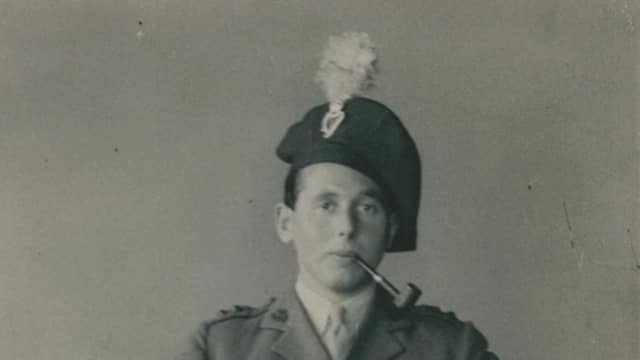

A NATION at war can be a great leveller, with people from all walks of life pulling on the uniform to answer the call to arms. The Antrim area saw a huge influx of troops during the Second World War - but many in that fighting force had another string to their bow.
A NATION at war can be a great leveller, with people from all walks of life pulling on the uniform to answer the call to arms.
The Antrim area saw a huge influx of troops during the Second World War - but many in that fighting force had another string to their bow.
Back in December 1940 reports of one such soldier emerged. For a short time the town had a musical genius in its midst - though it did not necessarily hit the right note with local folk!
‘Ulster is full of undisclosed talent today’, noted a reporter that Christmas.
‘The soldier with whom you may rub shoulders may be a genius in some line. This is only to be expected seeing that in the British Army all walks of life are represented.
‘Many of eminence serve in the ranks - some by choice, others by force of circumstances, but all happy in the thought that they are rendering a useful service to their country.
‘To ‘blow their own trumpet’ is not to their liking and so it is that the average person does not appreciate that with Forces are men of many talents’.
People, that is, like Vivian Joseph.
Born in Port Talbot, the young soldier had started playing the cello at seven, after hearing a recital by the Australian cellist Lauri Kennedy - grandfather of Nigel.
After only 18 months, he was hailed as a prodigy; and he went on to win many prizes, twice heading his class at the National Eisteddfod.
He was given a scholarship to Herbert Walenn’s London Violoncello School, made his first broadcast in 1932, and continued studying with Walenn at the Royal Academy of Music. In his first term, Sir Henry Wood, who conducted the Academy student orchestra, chose him as soloist for the 1934 annual RAM concert at Queen's Hall.
Each year from 1937 to 1939, Joseph gave a successful recital at the Wigmore Hall.
But when war came he enlisted in the Royal Ulster Rifles, and made the journey to County Antrim.
A naturally modest man, the young maestro did not brag about his brilliant career - but he soon missed playing, so he made enquiries about locating an instrument.
Eventually, he was asked to visit a house where he was told cello would be available.
He called no fewer than three times. On each occasion he was asked to come back, but after the third fruitless visit he decided not to return.
He may have been one of the most mellifluous voices among London string players - but it seems that hard-working Ulster folk simply did not trust him with their prized instrument. Well, there was a war on!
A short time later he transferred to the London Irish Rifles. He was wounded in the shoulder and leg in North Africa, and was invalided out in 1944 and resumed his playing career while still on crutches, taking part in some of Myra Hess’s National Gallery concerts.
He died on June 22 2005 aged 89.