

How the village of black eyes has punched way above its weight!

WHEN you ask townsfolk about the many small rural settlements that dot the Borough, shoulders may be shrugged as quickly as an Olympic gold medallist straddling the parallel bars. Some may have a certain charm, of course, but those ‘backwaters’ are on the whole a pretty unremarkable bunch. Drive through them, if you must, but stop and breathe them in? No thanks.
WHEN you ask townsfolk about the many small rural settlements that dot the Borough, shoulders may be shrugged as quickly as an Olympic gold medallist straddling the parallel bars.
Some may have a certain charm, of course, but those ‘backwaters’ are on the whole a pretty unremarkable bunch. Drive through them, if you must, but stop and breathe them in? No thanks.
But looks can be deceptive.
Take Ballynure, for example. Ever been? Probably not, I’ll wager - but his small corner of Antrim and Newtownabbey, home to less than 700 souls, has some fascinating tales to tell.
Such as? Well, Jonathan Swift, the writer of ‘Gulliver's Travels’, was responsible for the Ballynure parish of the Church of Ireland.
A big name by any standard, but there are more.
The Clements family, who lived at Clements Hill outside the village, were the ancestors of Samuel Langhorne Clemens, better known as Mark Twain. Twain, who was author of works including The Adventures of Tom Sawyer, was described by William Faulkner as ‘the father of American literature’.
James Whiteside McCay (1864–1930), an Australian general during the Great War, was born in Ballynure.
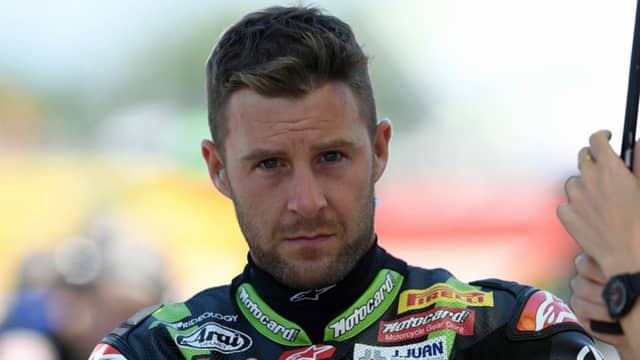
And World Superbike champ Jonathan Rea, the most successful World SBK rider in the competition's history, hails from the village too - as does Northern Ireland soccer star Paddy McNair.
This is a place that punches well above its weight - and back in the 19th century that was taken quite literally!
Back then the Ballynure Fair drew huge crowds, not just for the livestock - but for the fighting.
Many a ding dong feud was settled on its blood spattered streets. Warring farmers from the likes of Antrim or Templepatrick would not dream of settling it there and then. Oh no, they would let it fester until September or October when the fair was held - and then they’d make a week of it!
And there were some truly ‘titanic bouts’. The epic fisticuffs would last for hours, before the exhausted combatants retired to separate pubs to steel themselves for days two of the scrap. This would continue until one or the other decided they’d had enough and would slink home, often leaving their cattle or pigs to fend for themselves.
The scraps drew crowds of their own, but there were some who tried to prevail on the fighters to settle their differences. People like Mr Beattie, a pillar of the Methodist Church.
It was said he was ‘a great hand as a peacemaker’ who had managed to patch up hundreds of quarrels.
He was just one of the colourful churchmen who tended their flocks at Ballynure.
When Antrim man William Orr was executed in 1797, sparking the following year’s United Irishmen’s uprising, many in the village mourned his passing.
Indeed, when Orr faced the gibbet he was attended by the Presbyterian Minister of Ballynure, the Rev Adam Hill.
After the body was cut down at Carrick, the funeral procession set out for Templepatrick, escorted by a great crowd which multiplied as it approached Ballynure.
Dusk had fallen when the village was reached and with the minister’s blessing, the coffin was placed in the Presbyterian meeting house for the night - and a wake was held in the manse across the road.
Rev Hill’s actions did not go unnoticed, however. The authorities showed their displeasure by arresting him and throwing him into Carrick jail for two days.
Nevertheless, the minister continued to serve the community for many years until his death, and he left an indelible mark on local life.
The stone which marks his resting place bears these words: ‘Beneath are deposited the remains of the Rev Adam Hill, Presbyterian Minister of Ballynure, who departed this life on 21st July 1827 in the 70th year of his age and the 42nd of his ministry. Like Nathaniel of old he was ‘an Israelite indeed in whom there was no guile’.
The next minister of the congregation was the Rev James Whiteside McCay, who was ordained in 1826 and died in 1847 - followed by Rev Alexander Hamilton, who resigned in 1859 to emigrate to Australia.
Next came the Rev James Whiteside McCay, son of James, and in 1865 he set sail for Australia too where he became Professor of Church History. And, yes, it was his son who led the men into battle in the First World War.
Rev William Kerr was next and he was going nowhere, serving Ballynure from 1866 to 1909. He was a man of ‘exceptional personality’, whose love of poetry was shown in his sermons. At the end of his New Year address in 1875 he recited a poem of his own composition which contained no fewer than 16 verses!
Stamina was key back then for God fearing locals - and when people went to church they were expected to make a day of it.
Many brought substantial ‘pieces’ to scoff down in the 20 minute break between Sunday services.
During that interval, the bell-ringer solemnly marched up and down the main street calling any laggards to the house of prayer. Invariably his final stop was outside the main public house!
Another day written into Ballynure lore was the Battle of the Tombs, during the incumbency of the Rev Charles Falloon.
The new Church of Ireland was being built opposite the old one and the Dobbs family, then the main landlords in the district, were given permission to erect a new vault for their dead on the site of the old church.
One day while the work was in progress, the rector of Ballyeaston arrived declaring that the bones of his ancestors were being disturbed - and he was having none of it.
Public indignation was whipped to fever pitch, with rival camps organising fiery public meetings. Public opinion, ultimately, carried the day.
But perhaps the most famous incumbent of Ballynure was Dean Swift in the dying days of the 17th century.
Back then the Church of Ireland flock was small - so much so that on one Sunday Swift arrived to discover that his congregation consisted of the sexton.
Pensively, he wandered to the banks of a local dam and began to ‘skim’ flat stones - to the astonishment of the villagers, surprised by this curious violation of the Sabbath.
Soon a large crowd had gathered and Swift had his congregation. He preached his open air sermon there and then and it went down in history as one of the most memorable the parishioners of Ballynure had ever heard.
So there you have it. Maybe next time you are travelling through, why not pull over and take a look around?