

'I can't find the words to explain the pain' - Antrim woman speaks out about living with rare illness
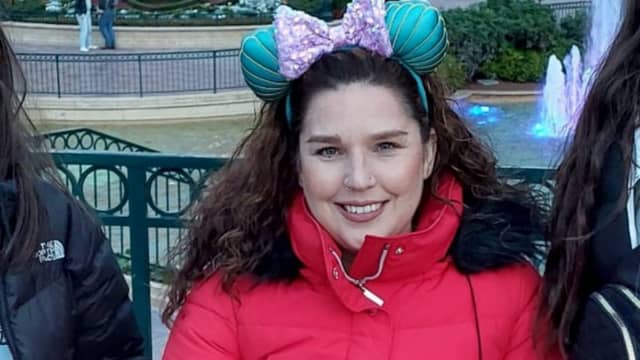

AN Antrim woman has spoken about her experience with a rare illness after supporters undertook a sponsored walk at Stormont to raise awareness about the condition. Ehlers-Danlos Syndromes (EDS) are a group of thirteen individual genetic conditions - connective tissue disorders with body-wide symptoms which can be disabling, affecting all aspects of life.
AN Antrim woman has spoken about her experience with a rare illness after supporters undertook a sponsored walk at Stormont to raise awareness about the condition.
Ehlers-Danlos Syndromes (EDS) are a group of thirteen individual genetic conditions - connective tissue disorders with body-wide symptoms which can be disabling, affecting all aspects of life.
They can affect anyone. Symptoms include musculoskeletal problems, chronic pain and fatigue, gastrointestinal disturbance, pelvic and bladder problems, autonomic dysfunction and anxiety.
The most common type, hypermobile EDS (hEDS), is difficult to diagnose as there is no single test. Hypermobility spectrum disorders (HSD) present many of the same symptoms and share the same diagnostic challenge as hEDS. Together, hEDS and HSD are fairly common (possibly affecting 1 in 500 people, so almost 4,000 in Northern Ireland). The average time to diagnosis in the UK is 10 to 14 years.
Undiagnosed and untreated, EDS and HSD is putting pressure on the NHS through multiple appointments with no clear outcome and inappropriate treatments, but early diagnosis and management can prevent disability.
To date, the diagnosis and management of people with hEDS or HSD has relied on the personal interest and knowledge of a small number of clinicians rather than formally commissioned services.
Patients with hEDS or HSD are not receiving the care and support they need and too often do not receive referrals to specialists who have the expertise necessary to diagnose these conditions and advise on treatment.
People with the condition believe that this constitutes a lack of equality in access to healthcare for those with hEDS and HSD, which has resulted in unacceptable suffering for some patients.
May was Ehlers-Danlos Syndrome and Hypermobility Spectrum Disorder Awareness Month and people with the condition and their supporters urgently called for properly commissioned services for the diagnosis and treatment of EDS and HSD in Northern Ireland.
A petition has already attracted over 1,500 signatures.
Connective tissue lies between other tissues and organs, keeping these separate whilst connecting them, holding everything in place and providing support, like the mortar between bricks.
In EDS, a gene mutation causes a certain kind of connective tissue – the kind will depend on the type of EDS but usually a form of collagen – to be fragile and stretchy. This stretchiness can sometimes be seen in the skin of someone with EDS; individuals with the condition may also be able to extend their joints further than is usual – this is known as being hypermobile, bendy or double-jointed.
As collagen is present throughout the body, people with EDS tend to experience a broad range of symptoms, most of them less visible than the skin and joint differences.
These are complex syndromes affecting many systems of the body at once, despite this EDS is often an invisible disability. Symptoms commonly include, but are not limited to, long-term pain, chronic fatigue, dizziness, palpitations and digestive disorders.
Such problems and their severity vary considerably from person to person, even in the same type of EDS and within the same family.
Hypermobile EDS (hEDS) and Hypermobility Spectrum Disorders (HSD) Hypermobile Ehlers-Danlos syndrome (hEDS), which used to be known as the hypermobility type or type 3, is thought to be the most common genetic connective tissue disorder.
There is no up-to-date research to tell us exactly how frequently it occurs. It can be inherited from a parent with the same faulty gene, alternatively, someone can be born with a new mutation so that the condition is occurring in their family for the first time.
Recently some changes were made to the way hypermobile Ehlers-Danlos syndrome is diagnosed. There is no test for hEDS, so diagnosis involves looking for joint hypermobility, signs of faulty connective tissue throughout the body (e.g. skin features, hernias, prolapses), a family history of the condition, and musculoskeletal problems (e.g. long-term pain, dislocations).
There are many associated symptoms and disorders which don’t form part of the formal criteria, and which do not directly result from joint hypermobility, for instance, orthostatic tachycardia, digestive disorders, pelvic and bladder dysfunction, and anxiety disorders. These are often more detrimental to quality of life than the joint symptoms.
Many people do not fully meet the new diagnostic criteria for hEDS but their hypermobility still causes problems for them. They may experience pain and dislocations, have a poor sense of where their joints are without looking, be prone to injury, have curvature of the spine, and have degenerative joint and bone disease.
These people may also have many of the non-musculoskeletal disorders associated with hEDS, but they do not quite ‘qualify’ for hEDS. After other possible conditions are excluded, a diagnosis of generalised hypermobility spectrum disorder (HSD) may be made here.
Today the prevalence of the most common type of EDS, Hypermobility type (hEDS) is thought to be at least 1 in 500 and a recent survey that took place in Wales has indicated it could be as common as 1 in 227. To use the figures of one in 500 this would mean that there could be approximately 4000 people in Northern Ireland who could have hypermobile type EDS (hEDS). So hEDS is actually a common condition but in Northern Ireland, it's rarely diagnosed and it's rarely treated correctly.
Currently, in EDS UK has approximately 250 members from Northern Ireland which is a fraction of the figure that could be affected.
For many people who have EDS the journey to diagnosis will have been a long convoluted one. Poor awareness of the conditions amongst medical professionals means that it can go undiagnosed for many years.
It is common to be wrongly diagnosed with another condition first in an effort to find answers.
Misdiagnosis of fibromyalgia and ME/Chronic fatigue syndrome, IBS for people who have digestive, are common. Typically people will wait years or even decades for a diagnosis of EDS if they get one at all. Yet diagnosis is very important. All the types of EDS are genetic and are passed from parent to child in different ways according to the type.
A precise diagnosis gives information about the risk of passing the condition on to a family member.
Diagnosis guides proper management of the syndromes, which includes learning to avoid activities that might cause irreversible joint damage as well as unhelpful treatments such as inappropriate medications. For these reasons, the prognosis is likely to be better if someone is diagnosed at a younger age.
Many people with EDS would also agree that diagnosis is important for psychological reasons, encouraging motivation and acceptance.
The diagnostic pathway differs according to the type of EDS suspected with a different route for hEDS/HSD to that for the rare types.
Many other conditions appear to be commonly linked to EDS, particularly with hEDS. Although the association has been demonstrated there is not yet enough scientific evidence to prove that one causes the other.
In May 2023 EDS UK set up a campaign to call upon the government through petitions and community engagement, to fund suitable NHS services for the diagnosis and treatment of hEDS and HSD. An important part of this campaign is a separate petition for each part of the UK (England, Scotland, Wales and Northern Ireland).
The group hosts regular face-to-face support group meetings in Belfast, Coleraine and Dungannon, monthly online meetings, a Facebook group, email and Facebook messenger services and awareness events
Jenni Allen from Antrim town said that living with Ehlers-Danlos Syndrome affects every part of her day.
“Connective tissue supports, protects, and gives structure to other tissues, joints, and organs in the body. Therefore, any part of your body can be affected.” she said.
“Joints can sublux just from me standing up. This then means days or even weeks to recover. I can no longer walk more than a few steps, so I need to use a wheelchair when I leave the house. The pain is so severe that simple day-to-day tasks are impossible.
“My day starts on the back foot most mornings, as I don't get much sleep due to pain. I have a stairlift now, which helps so much. No more crawling upstairs or sleeping on the sofa.
“I have two beautiful daughters who are teenagers so they can do much more for themselves but at the same time they still need their Mummy and unfortunately there is now a lot I can not do, which I think has been the biggest blow of this illness.
“Not being able to do things I took for granted before. Having to ask for help with simple things. As the saying goes, it really does take a village.
“Not only does EDS cause unimaginable pain, but it can also affect the internal organs, too. I now have heart problems, gastric and digestive problems, and a brain condition.
“As you can imagine, these cause many, many symptoms. All of these things, including the pain, need medication to help control them, causing me to need to take copious amounts of tablets at various times a day. Lots of the medication causes drowsiness.
“This, mixed with the fatigue caused by pain and broken sleep, leads to me having to rest and nap during the day. All so I can function until to 9pm - before going to bed.
“This allows me to be present when my children get in from school and be able to have a family meal together. Although a lot of nights I can not eat due to pain and/or nausea, that is a result of the gastric issues.
“Then, the evenings are always a struggle. The pain is so extreme that I can be driven to tears. I can never find the right words to explain how bad the pain actually is.
“If I have a busy day, like having a hospital appointment, I have to take it easy the day before, and then I will need a few days after to rest because the pain and fatigue are another level again.
“All these symptoms understandably have an effect on your mood. There are days when you feel so low because of the pain, the things you can't do, the feeling that you have no purpose, and the knowledge that you can't just go somewhere because you want too.
“On the other hand, when I do leave the house maybe I’ve put on a bit of makeup to cover my pale, sick-looking complexion. Someone could come over and ask, ‘What's wrong with you?’ When they see, I'm in a wheelchair. This sends urgent panic through me as I never know what to say. Do I tell them my full traumatic story? Do I them a lie? Do I politely tell them to go away?
“Another challenge with this illness is that there are no specialists in Northern Ireland, which can make treatment near impossible sometimes as doctors say, ‘It isn’t their field’.
“I have actually been told, to ‘lower my expectations’, that this is as good as it is going to get, and there is no hope of living pain-free.
“This really is a lift changing, sometimes life-limiting illness.”
Rhoda Walker, also from Antrim, has been volunteering in the rare condition field for about eight years now and was Chair of the Northern Ireland Rare Disease Partnership for more than three years.
She explained: “If collagen is the glue that holds our bodies together, a healthy person’s glue is like super glue whilst someone with EDS’s is like chewing gum.
“We can only being to imagine how many people are walking around with a whole catalogue of health conditions and misdiagnosis of things, right through from childhood.
“From things as simple as growing pains to Osgood Schlatter Syndrome, Fibromyalgia, Chronic Fatigue Syndrome, gastro issues, joint complaints, chronic pain, to name but a few, when really what they have is Ehlers Danlos Syndrome.
“They say ‘if you can't connect the issues, think connective tissues’. We just need to get this information into as many people's hand as possible so they have some better understanding of what is going on in their bodies and they can talk to their GP more knowledgably.”
Mandy McCreight is the the EDS Northern Ireland lead volunteer.
“EDS was once considered rare, but the most common type Hypermobility type (hEDS) commonly affects 1 in 227 to 1 in 500 people.”she said.
“But yet very few people have heard of hEDS. Even though it's common people with hEDS in Northern Ireland are rarely diagnosed and rarely treated correctly. There are also 12 other very rare types of EDS.
“Misdiagnosis is common with most people having had at least one misdiagnosis on the very long journey to diagnosis. Misdiagnosis of fibromyalgia and ME/Chronic Fatigue Syndrome are very common. The median time to diagnosis is 10 years and in Northern Ireland, that could be even longer.
“I also have hEDS and do both my adult children. Our walk at Stormont was to raise much-needed funds, create awareness and bring our Northern Ireland petition to Stormont.”
As well as it being the first NI Dazzle Walk, local supporters have also raised the most so far as a team across the UK and are aiming to break a target of £1,500.
You can sign the petition at https://www.change.org/p/provide-suitable-nhs-
services-for-diagnosis-management-of-eds-and
-hsd-in-northern-ireland
The fundraising link can be found at https://www.justgiving.com/team/eds-nidazzle
To contact EDS UK email [email protected], [email protected] or call the EDS UK Advice Line on 0800 907 8518
If local people need support they can register as a member for FREE with Ehlers Danlos Support UK and join the private NI Facebook page at
https://www.ehlers-danlos.org/membership-
account/membership-levels/