

'Incinerator project will not harm Lough Neagh'
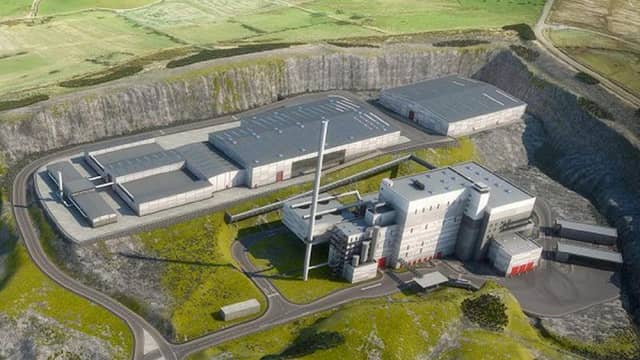

THE company behind the proposed incinerator which could end up handling a large percentage of Antrim and Newtownabbey’s black bin waste, has strongly refuted claims that the planned facility would pose any threat to the Lough Neagh eco-system. Last week, campaign group No-Arc21 flagged concerns raised by the Water Management Unit (WMU), an arm of the Northern Ireland Environment Agency (NIEA) over potential foul waste discharged from the facility.
THE company behind the proposed incinerator which could end up handling a large percentage of Antrim and Newtownabbey’s black bin waste, has strongly refuted claims that the planned facility would pose any threat to the Lough Neagh eco-system.
Last week, campaign group No-Arc21 flagged concerns raised by the Water Management Unit (WMU), an arm of the Northern Ireland Environment Agency (NIEA) over potential foul waste discharged from the facility.
Last year, a decision to halt the building of the multi-million pound waste incinerator was overturned in the High Court.
The £240m project at Hightown Quarry in Mallusk could thermally treat 300,000 tonnes of black bin waste every year.
The project has been the subject of a planning battle for almost a decade.
Northern Ireland recycles about half its household waste. Landfill capacity, which accommodates around a quarter, is running out, while the rest is exported across Europe for incineration.
arc21 is a joint committee for six Northern Ireland councils, including Antrim and Newtownabbey, which behind the plans for the incinerator.
Jackie Keaney, Commercial Director at Indaver, the European waste management firm behind the plans to ‘deliver modern waste infrastructure to meet the identified needs of six councils in the arc21 area’, responded to the claims made in the Antrum Guardian last week.
“The arc21 residual waste treatment project is one of the most heavily scrutinised planning applications in Northern Ireland’s history.” she said.
“During the long running planning process over the last 10 years, the project has received no objections from over 70 statutory consultee responses including from the Northern Ireland Environment Agency (NIEA), Public Health Agency and DfI Roads Service.
“The project has also previously been recommended for approval now four times by both the Department for Infrastructure (DfI) Strategic Planning Directorate, and by an independent Planning Appeals Commission review.
“As part of the planning application arc21 has prepared a comprehensive drainage assessment for the proposed site which has been accepted and agreed with the Water Management Unit (WMU) within NIEA on a number of previous consultation responses.
“The previously accepted proposals to manage water and drainage included a package treatment plant to deal with foul sewerage and a separate stormwater regime flowing into existing reedbed ponds on site.
“Following the submission of updated Further Environmental Information (FEI) last September that updated the planning application for this important public infrastructure project, arc21 has since received a number of responses, with the majority of consultees continuing to have no objection and no observations as to the proposed development as it interacts with their areas of interest.
“Any observations raised by statutory consultees are now being responded to and this includes working through WMU’s latest response to understand what is needed to secure a consent to discharge into a water course that is subject to a separate statutory process.
“We are confident that just as in previous consultations that constructive feedback from statutory consultees will be acknowledged and addressed to their satisfaction.
“We hope that following this latest round of consultations that we are nearing a point where we can receive a robust and evidence-based planning decision to allow this critical public infrastructure to be delivered.
“We need to remember that the project is designed to deliver a sustainable solution for the six councils’ black bin waste and will directly contribute to Northern Ireland’s ambitious recycling and landfill diversion targets while also recovering energy from our non-recyclable waste locally.
“This will reduce the current practice which last year saw over 256,000 tonnes of Refuse Derived Fuel (RDF) from our household black bin waste exported to European countries including Norway, Sweden, Denmark, Germany, Latvia and Ireland.
“This is a short-term practice which comes with significant environmental and financial cost and where others extract our waste’s value through energy recovery while at the same time, we import expensive fossil fuels to meet our local energy needs.
“As climate change policy world-wide moves into implementation of real measures the project also has the potential to make wider contributions towards climate change mitigation by providing district heating and production of hydrogen as already being deployed at similar facilities operated by Indaver.
“Economically, this project gives the six local councils a robust and sustainable solution for their waste at a time when public finances are under severe pressure. Currently the costs of both landfill and waste export are paid for through local rates and this project will redirect those costs to deliver a more sustainable solution with many local economic and environmental benefits.
“It also has the potential to deliver a revenue share opportunity for arc21’s councils from the sale of energy and recycled material generated by the project.”
Meanwhile, a spokesperson for arc21, the joint committee for six of Northern Ireland’s councils said;
“It would be unfortunate if the unwarranted claims to link the proposed development of much needed modern, easily regulated waste treatment infrastructure to the historic and on-going ecological degradation of Lough Neagh raised anxiety in anyone who read such claims.
“The statutory planning process addresses land use issues against Northern Ireland’s statutory planning framework.
“However, there are several other statutory consents that need to be secured, including permits to discharge to air and water courses.
“The proposed development at Hightown Quarry is at the head of a natural river drainage catchment system passing through existing industrial and residential areas.
“The development is aligned with the Mills Report recommendations following the large-scale illegal landfilling at Mobuoy to reduce the number of waste movements that leaves Northern Ireland exposed to waste crime that can damage Northern Ireland’s environment, including Lough Neagh.”