

Masterminding the Battle of Randalstown cost a 22-year-old Crumlin man his head...
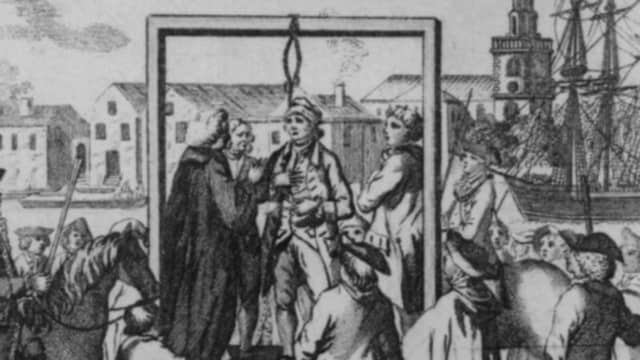

THIS week 225-years-ago a promising young barrister from Crumlin breathed his last - laying down his life for his role in the Battle of Randalstown. With uprising in the air following the turbulent events of 1798 there was to be no mercy. Oh no, for James Dickey the retribution was bloody, brutal and swift.
THIS week 225-years-ago a promising young barrister from Crumlin breathed his last - laying down his life for his role in the Battle of Randalstown.
With uprising in the air following the turbulent events of 1798 there was to be no mercy. Oh no, for James Dickey the retribution was bloody, brutal and swift.
Born into a prominent Presbyterian family, the 22-year-old’s political beliefs were forged in the fires of revolutions that had swept through America and France.
And when the call to action came, he was ready to heed it.
In May 1798, the United Irishmen took up arms against the Dublin government and the British Crown.
Starting in Kildare, the insurrection quickly spread to other counties in Leinster before finally reaching the Presbyterian districts surrounding Belfast.
On 5 June the Antrim societies of United Irishmen met in Templepatrick where they elected textile manufacturer Henry Joy McCracken as their General. The next day McCracken issued a proclamation calling for the United Army of Ulster to rise.
Initially they had some success, as the towns of Larne, Ballymena, Maghera and Randalstown were taken and the bridge at Toome damaged to prevent the government rushing reinforcements into Antrim from west of the Bann.
According to the memoirs of Templepatrick man James Burns , Dickey had commanded the insurgents at Randalstown - and he led from the front.
Dickey, he said, had killed Samuel Parker, a ‘traitor, with his own hands, while standing at his own door, where he went for the purpose’.
But with the attack on Antrim thwarted, the rebellion was doomed to fail - and the United Irishmen fled to avoid the dreadful revenge of the Crown.
Dickey hid out at Divis Mountain, but he was soon captured by the Sutherland Fencibles and hastily tried for his ‘crimes’.
His legal training could not save him.
He was sentenced to hang at Corn Market in Belfast on 26 June 1798.
His fate was sealed, but James Dickey refused to go quietly.
Witnesses claimed that the local man steadfastly refused to wear the customary black hood as he approached the gallows.
“Sir, don’t cover my face!” he told the puzzled hangman.
“Don’t think gentlemen, I am ashamed to show my face among you. I am dying for my country!”
Stirring stuff, but was it strictly true?
Another version of that grim day, admittedly from a source ‘hostile to the United Irish cause’, claimed that Dickey had recanted his commitment to the ‘brotherhood of affection’ between Protestants and Catholics as he stood at the scaffold.
Furthermore, they claimed, he warned the assembled that had ‘the Presbyterians of the north succeeded in their [republican] designs, they would ultimately have had to contend with the Roman Catholics’.
Seems unlikely when he had been prepared to lay down his life for the cause just a few weeks previously - but history is often written by the victors.
What happened next, however, is not contested.
His lifeless body was decapitated and the head was stuck on a spike outside the Market House on Belfast’s High Street.
And there it remained, a grisly warning to others, ‘until his flyblown head rotted’. The smell was ‘repugnant’ after months in the summer sun.
Other executions of United Irishmen would follow over the next days and months. William Magill, Hugh Grimes, Henry Byers, John Storey, George Dixon - all decapitated.
Young Henry Joy McCracken, who had led the attack on Antrim town, was the only one who kept his head.
As a side note, James Dickey’s brother John, who also resided in Crumlin was also implicated in the rebellion.
He was informed on by neighbours who had noticed that he was making pikes and attending secret meetings of the United Irishmen late at night.
Arrested and court-martialled, he refused the terms granted by the government to the ‘State Prisoners’ in Dublin.
He was transported to the West Indies for a lengthy spell of penal servitude, but managed to escape and made his way to the United States where he started a new life.