

Murdered in cold blood
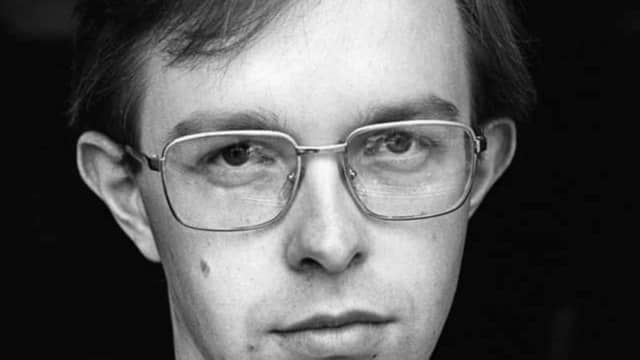

THE rain steadily fell from a slate grey sky as former Mayor Brian Graham knelt to pay his respects at a grave at Duneane Church yard near Randalstown on Thursday morning. Could it really be 40 years since his cousin Edgar was murdered yards from Queen’s University, where he worked as a law lecturer?
THE rain steadily fell from a slate grey sky as former Mayor Brian Graham knelt to pay his respects at a grave at Duneane Church yard near Randalstown on Thursday morning.
Could it really be 40 years since his cousin Edgar was murdered yards from Queen’s University, where he worked as a law lecturer?
One of the brightest political lights of his generation was brutally snuffed out by the IRA, robbing the Ulster Unionists of a future leader and leaving a family utterly devastated.
He was just 29-years-old.
And he wasn’t even supposed to there that chilly morning in December 1983.
A member of the Northern Ireland Assembly, Mr Graham was rushing to an Affairs Committee meeting when he spied fellow unionist rep Dermot Nesbitt at University Square.
He crossed the street to greet him, and they chatted for a few moments close to where the old library once stood.
But the young politician was a marked man.
Two men posing as students were watching the exchange from behind a low wall, and at 10.50am they made their move.
“All of a sudden I heard a shot and he fell and I got covered in his blood,” Mr Nesbitt told reporter Sam McBride this week.
A gunman stood over the dying man and ‘pumped’ five more bullets into his head.
“I turned around and saw him lying there. I knew he was dead.”
The triggerman put the gun in a lever arch file and the two men made their way in the direction of the School of Music building, mingling with the students as if nothing had happened.
“It happened so quick. So quick,” recalled the emotional UUP man, who returned to the scene for the first time in 40 years.
Moments later he met future UUP leader David Trimble and told him what had happened - and it was he who identified Mr Graham.
The image of his body lying on the pavement covered by a dark blanket, his briefcase lying where it was dropped, became one of the most enduring of the Troubles.
Mr Nesbitt said he could remember the tragic tableaux ‘like it was yesterday’ - much as he has tried to forget it.
“I got offside. I couldn’t bear it any more.”
Sylvia Hermon was in the nearby Students’ Union when the news of the murder finally broke, and she recalled that a ‘cheer erupted’ . She never returned.
The IRA released a typically terse statement later that day.
“This should be a salutory lesson to those loyalists who stand foursquare behind the laws and forces of oppression of the nationalist people,” said a spokesman.
But Edgar Graham was not a firebrand politician. The Oxford graduate was progressive, intelligent - and he was prepared to listen.
True, his support for the supergrass trials which were inflicting heavy damage on Northern Ireland’s terror groups would have brought the softly spoken Randalstown man to the attention of the paramilitaries - as would advice he had reportedly given to the Northern Ireland Prison Service.
In other words he posed a political threat. The law lecturer had the courage of his convictions. And for that he had to die.
Former IRA member turned police informer Sean O’Callaghan in his book The Informer suggested that the IRA killed him because he was regarded by a journalist as ‘potentially the most effective political opponent facing Sinn Féin that the Ulster Unionists had yet produced’.
Former UUP leader, Lord Molyneaux, agreed: “Had Mr Graham not been murdered he would have become the leader of our party, such was his calibre.”
No-one has been convicted of the murder, though two 23-year-old Queen’s graduates received suspended sentences for withholding information.
Using Parliamentary Privilege, David Trimble named a member of the Queen’s Law faculty at the time of the shooting, but the man has subsequently ‘categorically denied’ passing information to the IRA.
Four decades on, the Graham family are still mourning the loss. For Brian Graham memories of birthday parties and good times shared are inevitably tempered with sadness - of thoughts of what could and should have been.
Like Mr Nesbitt, the day of the murder is indelibly burned on his memory.
“On the morning of Wednesday 7th December 1983 news was filtering through of a shooting around 10.50am at Queen’s University in Belfast,” he said.
“Working as a postman in a rural area of Antrim I was unaware of this until a few hours later when one of my customers told me what had happened.
“On asking who the victim was I was told ‘Edgar Graham’. At that moment I just couldn’t take it in.
“In those days communication was vague, no mobile phones, no social media and no radios in Post vans and so it wasn’t until I arrived home that the reality of what happened began to sink in.
“Edgar was a cousin of mine and many a time I attended his birthday parties when we were growing up in Randalstown.
“To date and after 40 years no one has been charged with his murder and as time moves on I and others don’t forget this, and many other incidents of the Troubles whilst growing up in Northern Ireland.
“Edgar , who was 29-years-old and an Ulster Unionist Assembly member for South Belfast at the time, is buried in Duneane Presbyterian Church Graveyard outside Randalstown.
“In November 2014 his father Norman passed away and a few weeks later in January 2015 his mother Anna also passed away.
“Today, Wednesday 7th December 2023 I remember my cousin Edgar, the Graham family circle and his only sister Anne. Also to his many friends and colleagues who knew and worked with him.
“As it says on his headstone ‘Keep Alive the Light of Justice’.”
TUV leader Jim Allister, himself a former barrister, said the killing was ‘calculated and cruel’.
“On the 40th anniversary of Edgar Graham’s murder my foremost thoughts are with his beloved sister, Anne, who even this week has had to suffer the vile abuse of relentless and heartless republican trolls.
“I had the privilege to know Edgar quite well from our university days.
“His brutal murder 40-years-ago ranks among the most calculated and cruel of the IRA.
“I’m in little doubt that his prestigious talent as an up and coming Unionist leader made him a target for IRA terrorists who could not compete with his intellectual articulation of the unionist and anti-terrorist case.
“Whatever our differing party allegiances, Edgar was indisputably a unionist of great principle and ability whose talents would have been well used if evil men, who the aspiring First Minister continues to excuse, had allowed him to live.
“The murder of Edgar Graham is an abiding reminder of the anti-democratic ethos of the murdering IRA, which still imbues those who justify and celebrate their actions.”
* A powerful two-part podcast on the murder is available now on the Belfast Telegraph website.