

Pain of Muckamore abuse 'beyond comprehension'
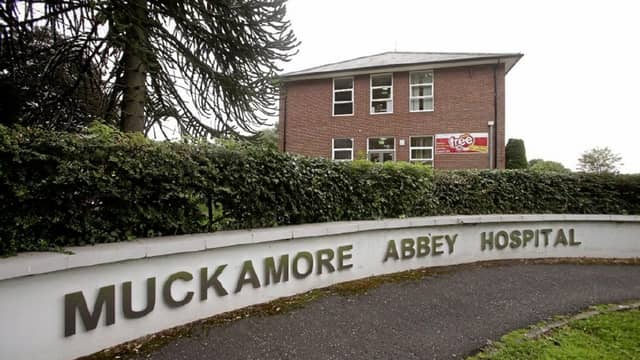

AFTER three years of harrowing testimony, the inquiry into abuse at Muckamore Abbey Hospital has drawn to a close. Run by the Belfast Health and Social Care Trust, the facility delivers services for adults with severe learning disabilities and mental health needs. The inquiry has sat for 120 days and heard oral evidence from 181 witnesses and considered 333 statements.
AFTER three years of harrowing testimony, the inquiry into abuse at Muckamore Abbey Hospital has drawn to a close.
Run by the Belfast Health and Social Care Trust, the facility delivers services for adults with severe learning disabilities and mental health needs. The inquiry has sat for 120 days and heard oral evidence from 181 witnesses and considered 333 statements.
The hospital in Antrim has also been at the centre of the UK’s largest ever police investigation into the alleged abuse of vulnerable adults and a number of prosecutions are ongoing.
In addition to the public inquiry, a separate major police investigation began in 2017 after allegations of ill-treatment began to emerge.
Fifteen individuals are facing prosecution, among them carers and nurses. The public inquiry, which was established by former Health Minister Robin Swann, began hearing witness evidence in June 2022.
It is hoped that the final report and recommendations will be delivered later in the year.
It was announced in 2023 that Muckamore would shut down for good, however the planned closure was delayed beyond June 2024.
The hospital is due to close when all remaining patients - thought to be around 25 - were moved to alternative accommodation.
In the last week, Belfast Health Trust, Department of Health and the Chief Medical and Nursing Officers all issued apologies to patients and their families for ‘failures’ in their care.
Inquiry Chair Tom Kark KC will present his final report to Health Minister Mike Nesbitt, said many people had believed the public inquiry would not get this far.
Delivering his closing remarks, Mr Kark said the inquiry had begun its work more than two years ago by hearing evidence from the sister of a man who had been a patient at the hospital for 25 years.
He said: “By giving evidence, the relatives of patients at Muckamore gave their loved ones a voice that they would not otherwise have had.
“We recognise that for many, probably all, the experience of giving evidence was itself very difficult.
“For others, just listening to the accounts of the patients’ experiences, the evidence that they heard must have been very harrowing for many of them.”
Addressing criticism of the inquiry from some families, Mr Kark added: “I understand that some of the core participants in the patients groups didn’t agree with every decision I made about the manner in which statements were to be taken, the scope of the evidence or the documentation to be received by the inquiry.
“I can only say I gave careful consideration to every decision I made and I used my best judgment to do what I believed to be right to secure the evidence we needed upon which a proper foundation for our conclusions could be founded.
“I have tried to act fairly in relation to every decision I have made.”
The chair said it was ‘highly unusual’ for a public inquiry to take place simultaneously with a large police investigation and criminal trial proceedings.
He pointed out that the inquiry had ‘successfully rebutted’ a number of legal challenges to its work.
He added: “It is testament to the careful approach the inquiry has taken in its collation of evidence and presentation of it.
“Some thought we would not get to its point.
“We have, and I hope the families will see that as a vindication of their persistence in advocating for this inquiry.”
The chair added: “I know everyone will now be waiting for the report and I can only say that I have written to the Minister for Health and indicated that I hope to have the report with him this year.”
Earlier, the inquiry had heard the closing statement from its senior counsel, Sean Doran KC, who praised patients and their families for: ‘insights of immeasurable value’.
“The pain that they have endured on becoming aware of what occurred at the hospital is, quite frankly, beyond our comprehension,” he said.
“We wish to acknowledge their courage in sharing deeply personal experiences with the inquiry.”
Mr Doran praised the contributions of two witnesses who have since died - Eileen McLarnon, who was a nurse at the hospital between 1972 and 2016, and Geraldine O'Hagan, who was a social worker for a number of patients' families. Ms O’Hagan gave evidence to the inquiry in 2024 while terminally ill and died less than a month later.