

The recovery of Lough Neagh will take time - and it will hurt
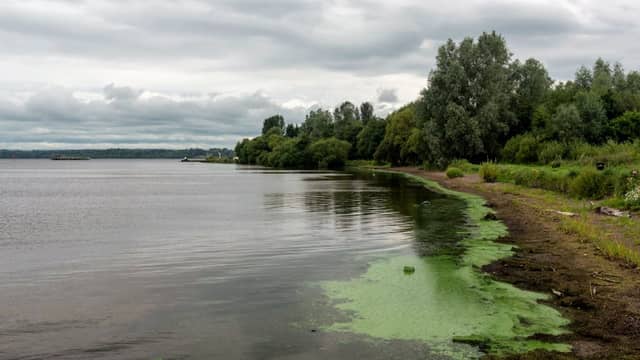

THERE will be quick fixes in the battle to save Lough Neagh from the rising tide of algae - and South Antrim MLA John Blair has warned that the process will inevitably ‘hurt’ many. The Alliance rep said that the pollutants and toxins that have poisoned the waterway have to be cut off at source - and the clock is loudly ticking.
THERE will be quick fixes in the battle to save Lough Neagh from the rising tide of algae - and South Antrim MLA John Blair has warned that the process will inevitably ‘hurt’ many.
The Alliance rep said that the pollutants and toxins that have poisoned the waterway have to be cut off at source - and the clock is loudly ticking.
And at last there seems to be some positive movement.
Senior civil servants have briefed the Assembly’s Committee for Agriculture, Environment and Rural Affairs on the Lough Neagh Action Plan, which was recently agreed by the Executive.
The action plan contains 37 proposals designed to address the various environmental issues that have fed the alarming growth of the suffocating green sludge in recent years.
It is clear that the stakes are high. As well as sustaining a major eel-fishing industry, the lough supplies 40 per cent of the province’s drinking water.
Experts believe that nitrogen and phosphorus from agricultural fertiliser running off fields and from wastewater treatment is a contributory factor.
The spread of the invasive zebra mussel species, ironically by making the water clearer. This allows more sunlight to penetrate, stimulating more algal photosynthesis.
Climate change is another factor cited, with rising water temperatures.
Rory O’Boyle, deputy director of the natural environment policy division at the Department of Agriculture, told the committee that the action plan was not a wish-list.
“It is a detailed, science-led, proportionate and ambitious set of actions that we feel can make a tangible difference to our waterways,” he said.
“But in this scenario there will be no quick fixes.
“This will be a long process. It could take 20, 30, 40 years, we don’t really know.”
He added: “The main focus as an action plan is to address the main cause of the blue-green algae blooms which is emanating from phosphorous from agriculture and some wastewater treatment works, effluent getting into our waterways.
“Our interventions need really to focus on this.”
He said the action plan would also tackle biodiversity issues at the lough.
“It is not the main focus of this report but it is very clear that we need to look at robust conservation measures to try and restore the ecological resilience of the lough itself.
“That will play an integral part in the health of the lough.”
Mr O’Boyle also revealed that the department have now appointed a new head of the Lough Neagh delivery governance team to take the action plan forward.
John Blair agreed that it will take time, but added that some steps should be taken as a matter or urgency.
“When you have a lough with the problems that have been so clearly identified and you know that the levels of phosphorates are seven times what they should be and the levels of nitrates are one-and-a-half times what they should be, and then you have to add to that wastewater treatment issues and the lack of investment and the septic tank problem as well.
“In the context of quick fixes, isn’t the quick fix really the quicker you stop those levels of pollutants and toxins flowing into that lough, then the quicker you fix the problem. Isn’t that really the crux of this?”
Dr Alistair Carson, chief scientific adviser at Daera, said nutrient pollution was indeed the ‘core issue’.
“That is why the core of the report is the catchment management,” he explained.
“While dealing with lake management options, that is not dealing with the core issue, that is just trying to manage the position.
“It shouldn’t dilute from the focus of dealing with the core issue itself.
“I don’t think the timescales involved in full recovery should deter us from really moving ahead and the implementation of the actions.
“Dealing with the loss of the nutrients into the water bodies will have shorter-term benefits in the aquatic environment with streams and rivers flowing into the lough.
“Those benefits will come through more quickly and will start the road to recovery for the lough’s ecology.”
Mr Blair said people were becoming frustrated at the speed of progress in getting to grips with issues at the lough.
He added: “Don’t please fool ourselves that there won’t be some hurt and some pain along the way for some people and some sectors, and all of those involved in contributing to the effects in Lough Neagh will have to do something to put that right, however long that takes.”
The Alliance MLA also raised concern that the Executive has still not approved Northern Ireland’s first environment strategy.
The UK’s environmental watchdog, the Office for Environmental Protection, is investigating the department over the failure to implement an environmental improvement plan.
Environment Minister Andrew Muir said this week he is continuing to engage with ministerial colleagues in the hope of getting the strategy agreed.
Mr Blair told the committee: “I think it is probably fair to put the marker down here today that if we don’t see some progress on that soon at the Northern Ireland Executive then we probably need to write as a committee.
“This will be a test of the shoulders that need to go to the wheels on the environment improvement plan, the environment in general and Lough Neagh in particular in the months and years ahead.”