

The shell-shocked hero left to languish in a pauper's grave
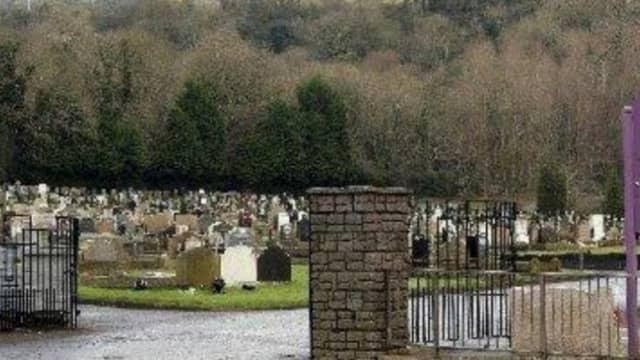

IN 1980 the old bones were carefully lifted from the claggy muck at Antrim Cemetery off the Moylena Road. They had lain there in the Paupers’ plot for 61 years. Unmarked. Forgotten.
IN 1980 the old bones were carefully lifted from the claggy muck at Antrim Cemetery off the Moylena Road.
They had lain there in the Paupers’ plot for 61 years. Unmarked. Forgotten.
Well, not quite. Each year on Remembrance Sunday the Royal British Legion had dutifully placed a cross on the grave.
For they had learned that among the hundreds buried there was Private J Crilly, who had served with the Royal Irish Fusiliers during the Great War.
He had died in Antrim in 1919.
Aside from these scant details, nothing more was known - even his full name.
Nevertheless, it didn’t feel right that a man who had fought for King and country languished in a pauper’s grave, so it was decided that his earthly remains would be exhumed and re-buried in the main cemetery, with a headstone.
News of Private Crilly’s final journey hit the headlines 45-years-ago, and Belfast woman Elizabeth Russell could not believe what she was reading.
For the unknown soldier was her brother. And his name was James.
Born in 1888, he was the fifth of nine children raised by Frank and Annie Crilly.
By 1980 Elizabeth, then aged 79, was the last surviving member of the clan.
And while so many years had passed, she had never forgotten her big brother.
“James was a hero to me, always in his soldier’s uniform, a red tunic with a stripe,” she recalled.
“He was very tall, about six foot four, with brown hair, blues, so fit and healthy and very smart.
“He always seemed to be away soldiering. The odd time he did come home, he couldn’t settle and would walk up and down the floor of the living room. I used to tell him he would walk out the bit of carpet we had in front of the fire.”
When war erupted in 1914, James was ready to answer the call - along with his brothers Frank, Fred and Dan.
Indeed Dan would never return, laying down his life in France. He was one of the first of the Ulster volunteers to die in the war.
“Apparently he stood up in one of the trenches to do a step dance for the lads and a sniper got him,” recalled Mrs Russell.
When his brothers returned home at war’s end, they were changed men.
Fred was suffering from shell-shock. James, even more so.
“He came home in 1918 and he wasn’t well.
“My mother went to check his bed one night. He always complained about noises in his head and mother kept an eye on him.
“She saw that he wasn’t in the bed and went downstairs. She found him in the living room, where he had tried to injure himself.”
Annie Crilly saved her son’s life that night, but it was clear that James needed urgent help.
He was taken to hospital, but was later transferred to Antrim County Lunatic Asylum - or Holywell Hospital, as it is known today.
There was still stigma attached to mental health in the post war years, and the family seldom discussed James’ turmoil as he struggled to process the horrors he had seen at the front.
“My mother visited James in Antrim. None of the rest of us went, as far as I can remember,” said Elizabeth.
“The hospital told her one day that James could go home. He had been working in the fields and I suppose, to them, seemed to have recovered.
“My mother sent two of my brothers in to see him.”
And they were not convinced - and as a result Mrs Crilly decided that her son was ‘not quite ready’ to leave.
A short time later on May 25 1919 she was given the news that he was very ill. By the time she arrived at the hospital, the 32-year-old was dead.
“She never told us much about the death and I suppose she left it to the hospital to bury him.”
That they did - an ignominious end surrounded by strangers in an unmarked grave. As if he had never lived at all.
Elizabeth was pleased that, six decades on, his name had finally been restored.
“When I heard about the story I didn’t sleep all night.
“I could see a picture again of James in his red tunic. I’m so glad he has had a proper burial.
“He was my brother. You don’t forget.”
But what of the other people still resting in Antrim’s paupers’ graves?
In recent months there have been steps to commemorate them.
Antrim Town Councillor Lucille O’Hagan has played a key role in finally marking the previously unmarked sites in Antrim Cemetery.
“In 2023 I asked senior Council officers to look at the possibility of identifying Paupers’ Graves in Antrim Cemetery, with the aim of creating appropriate signage for these unmarked burial sites.” she said recently.
“A pauper’s burial is undertaken by a local Council in circumstances where no-one is available to make the necessary arrangements.
“It ensures that the deceased is laid to rest with dignity and respect.”
So how many graves are we talking about?
“During a site meeting with relevant officials in the cemetery in November 2023, we identified two sites which represent 456 burials, and discussed the best way of marking the graves.
“We eventually agreed on interpretive panels which would include a breakdown of where the deceased came from, including 303 from the old Antrim Asylum which was built in 1898 and occupied the present day site of Holywell Hospital.
“I am delighted to see that the information boards are now installed at Antrim Cemetery.
“I want to thank Council officers for their assistance in bringing forward this important initiative.
“I am also pleased to note that Council will now be looking at replicating Paupers’ Burial interpretive panels across the borough.”
Remembrance at last for people out of sight and out of mind for far too long.