

Viscount tried to stop the bloodshed in 1798, but lost his life - murdered by a man he knew
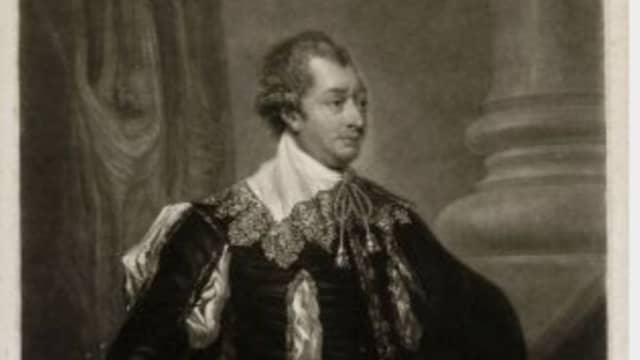

AFTER a pike plunged into his side, Viscount John O’Neill looked into the eyes of his killer - and he knew him. The date was June 7 1798 and the Battle of Antrim was raging - with the forces of the crown facing the full-blooded fury of the United Irishmen.
AFTER a pike plunged into his side, Viscount John O’Neill looked into the eyes of his killer - and he knew him.
The date was June 7 1798 and the Battle of Antrim was raging - with the forces of the crown facing the full-blooded fury of the United Irishmen.
Viscount O’Neill had been in Dublin a few days earlier and he knew full well that the whiff of rebellion was in the air.
In his capacity as governor of the county he summoned by public notice the county magistrates to meet in Antrim town on 7 June to discuss just that - inadvertently becoming the architect of his own downfall.
For this was too good an opportunity for hostage-taking for Henry Joy McCracken, the rebel adjutant general of Antrim, to miss and and he issued urgent battle orders to march on the town.
O’Neill, meanwhile, was travelling north. He spent the night of 6 June in Hillsborough. He galloped through Lisburn the next morning without stopping and so failed to receive the warning left for him by General Nugent.
The 58-year-old arrived in Antrim a little after noon - and slap bang into the thick of the fighting.
We will return to what happened next later, but how did the 1st Viscount O’Neill find himself there in the first place?
Born into one of the oldest families in Ireland - their lineage can be traced all the way back to the ‘Great O’Neill’ and the high kings of the fifth century - a life of wealth and influence was always on the cards.
He was born in Shane’s Castle in January 1740, the oldest son of Charles, who was an MP for over 40 years.
John followed in his footsteps and became a member of the Irish Parliament in 1761, a position he would hold for decades. He seldom spoke in the chamber, but when he did others listened
He became high sheriff in 1772 and subsequently governor.
As well as being a popular parliamentarian, he was considered a generous landlord. In 1769, for example, he reduced all rents by a third.
But there were the occasional slip up. In 1774 he attempted to introduce a bill to enable the Church of Ireland to raise taxes for the repair of their churches on Presbyterian members of the parish - even though most of his tenants belonged to that flock. It was defeated, but afterwards he took ‘great care to placate them’.
And it clearly worked. When re-elected for Antrim County in 1790 to scenes of ‘great enthusiasm’, he observed that his support was ‘inspired by the bottom’.
He was a founding member of the Whig Club, which brought together peers and commoners, and counted such luminaries as Archibald Hamilton Rowan and Theobald Wolfe Tone in their ranks.
Indeed, it was through his membership of the Club that he had contact with the United Irishmen - though his loyalty was ‘never in question’, hence his elevation to Baron in 1793 and Viscount two years later.
Away from politics, he and his wife Henrietta were noted patrons of the arts, especially music and theatre. They even built a theatre at Edendufffcarrick on the Shane’s Castle estate. He even had a private band made up of servants, who were required to be musicians.
His was a full life - but it was doomed to come to a sudden end on that hot June day in 1798.
When the Viscount arrived in Antrim that afternoon he was briefed on the scale of the uprising and ‘he wept, showing much emotion’.
Tellingly, he also told the military to be ‘merciful’.
During the thick of the affray Lord O’Neill proposed to the military commander that he would go through the lines of insurgents and ‘parley’ with their leaders ‘in the interest of peace and the prevention of further bloodshed’. The request was denied.
His Lordship was seated on his horse at the north corner of the market house and was about to cross to Dr Bryson’s house opposite when a man in a grey coat rushed forward.
He stabbed the horse and then thrust his pike into the nobleman’s side. Mortally wounded, he fell to the ground.
He was carried to Antrim Castle, but the siutation was grave. He died on June 18 to the ‘great grief’ of his family and many friends - including many United Irishmen who held him in high regard.
Jonah Barrington called him ‘high-minded, well educated, his abilities moderate, but his understanding sound; incapable of deception; one of the most perfect models of an aristocratic patriot’. James Caulfeild, Earl of Charlemont, summed it up more simply: it was impossible, he said, ‘not to love O’Neill’.
He was laid to rest, with military honours, in the family vault at Shane’s Castle.
So who was responsible?
An old tenant, on hearing the news, offered their opinion.
“It must have been by strangers who couldn’t know he was the kindly Lord O’Neill. It’s a devil of a pity...”
But it appears that was not the case.
In a contemporary account given to General Nugent by Major Seddon, the killer was indeed known to his Lordship - and he had an axe to grind.
“The villain who stabbed him was one named Jonathan Coleman, a former butler at Shane’s who was dismissed in November of last year,” he said.
“About the month of March past he made an attempt on my Lord’s life and then absconded.
“I have spiked his head on the market house.”
So this was not an act of war - it was cold blooded revenge.
And it did not end up well for either man.
O’Neill left behind a daughter and two sons. The eldest son, Charles, became the 2nd Viscount.
In 1831 he was appointed Lord Lieutenant of the County of Antrim.
However, following his father’s demise he could never bring himself to travel through Antrim town again.
Some wounds never heal.