

Well, well, well! The magic of Cranfield
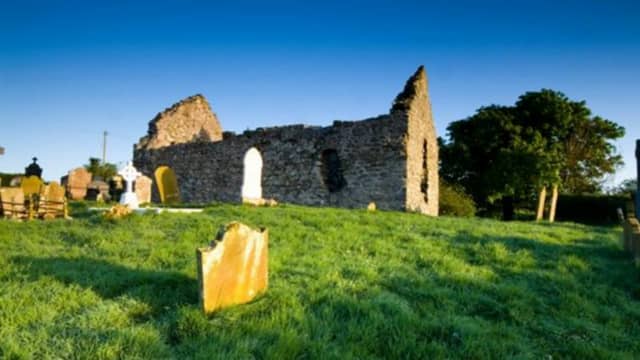

THERE is something magical about Cranfield on the shore of Lough Neagh near Randalstown. Rags flutter from trees of hawthorn and hazel in the shadow of an ancient ruined church.
THERE is something magical about Cranfield on the shore of Lough Neagh near Randalstown.
Rags flutter from trees of hawthorn and hazel in the shadow of an ancient ruined church.
And then there is the holy well.
The waters drawn from Cranfield were, it is said, imbued with healing properties by St Olcan - a saint and holy man with links to the area.
Indeed, it is thought he was buried there with soil brought from Rome.
From time to time, the water deposits amber ‘stones’ which crystallise out on the sides of the well.
At the end of June the water rises bringing these treasures to the surface and over the edge where they may be gathered.
Back in 1837 Samuel Lewis, in his renowned Topographical Dictionary, said that many believed them to be ‘objects of good fortune’.
“These singular stones are crystals of gypsum and are said to be particularly sought after by residents of that part of County Antrim who plan to emigrate to the colonies as they have long been believed to bring fortune and happiness to those who possess them,” said the venerable author.
It was said that a house in which rested a mystical Cranfield stone would never be burned by fire, nor robbed by thieves.
Many believed that a person who carried one of the gems could never be drowned.
A woman possessing a stone would have a safe and painless delivery in childbirth.
They were also said to be ‘most successful’ in stopping haemorrhages. Apparently when dissolved in any kind of spirit, the mixture would cure the patient ‘instantaneously’.
In other words, they were in much demand - particularly, it seems, with the gambling fraternity in the 19th century.
They reckoned that the larger the stone, the more powerful would be its influence over the eccentricities of Dame Fortune.
There was a always a steady market for such specimens from sporting gents of means - and it is said that many a golden sovereign changed hands during such transactions.
Sadly the market for Cranfield stones took a battering when it was realised that they bore a striking resemblance to lumps of resin from certain pine trees - and before long, no-one knew if they were buying the real McCoy or a counterfeit.
The well became neglected and overgrown.
It remains a wonderful spot, though.
Some may scoff at the powers of the waters or its amber treasure, but a visit to this gem will undoubtedly do your heart good.