

Work on local rail line halted by protests - by the fairy folk!
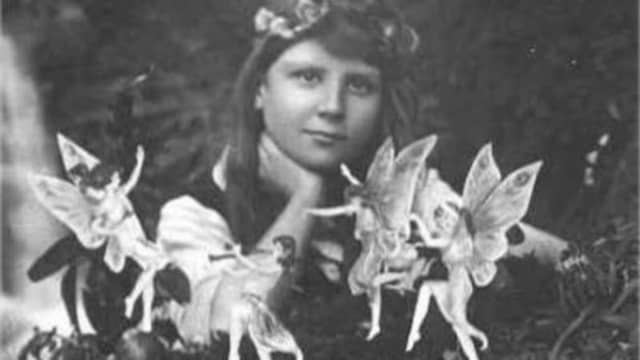

IT’S a big question - but do you believe in the little folk? Chances are, the answer is probably ‘Fairies? Are you wise?’. In years gone by, however, the response may have been more ambivalent.
IT’S a big question - but do you believe in the little folk?
Chances are, the answer is probably ‘Fairies? Are you wise?’. In years gone by, however, the response may have been more ambivalent.
Back in 1931 a local woman, thought to be Ireland’s oldest, said she was in no doubt.
Sarah McCashin had celebrated her 101st birthday that September, and she believed that the fairies were the reason for her long and comfortable life.
When she was younger she recalled there was a ‘firm belief in witches and fairies held by the peasantry’.
It was certainly a more superstitious age. There was ‘a general reliance’ placed on people endowed with the art of ‘tossing the teacups’ - that’s reading the tea leaves for portents of what is to come.
For those who believe, no proof is necessary. For those who don't believe, no proof is possible.
As for Sarah, she had all the proof she needed.
She said she often listened to the music and ‘beautiful singing’ of the little folk during their evening revels at the foot of a certain apple tree in the garden of her home at Sharvogues in Randalstown.
Indeed, she was once warned by a ‘strange woman’ who called at her door one day not to interfere or cut down the tree as it belonged to the fairies.
In return, they made a very special offer.
At the behest of the Fairy Queen, the caller asked for the loan of her rings. They would be returned and would bring her great fortune.
Sarah agreed, and the next day came the same knock at the door and the valuables were returned.
And she maintained the fairies were good to their word.
“I can say in truth that I have had nothing but the best of luck, with money and everything in plenty,” said the 101-year-old.
Undoubtedly, Sarah did not have to count her pennies.
Her father’s brother, Hugh Blaney, was a spirit merchant who ran a fleet of boats plying between Belfast and Dublin. And business was good.
He amassed a huge fortune and when he died ‘scarcely a hospital, asylum, college or school’ in and around his native Dublin benefited from the ‘Blaney millions’.
Almost £1,000,000 was banked in Randalstown - an enormous sum in the 19th century.
Others were more sceptical. To their cost.
Back in 1943, SJ Campbell related a story dating from a century before when the railway lines were being laid across the Borough - and ‘desecrating the haunts of the wee folk’.
When one particular line was being installed at the townland of Lenagh, at Drummaul Parish, the engineers came across an obstruction - a large fairy thorn.
To remove it, local lore had it, was to provoke the wrath of the fairies.
‘It was absolutely essential to evacuate the fairies from their dwelling, and so the workers entered into discussion as to how they should go about it, and became very heated as to who should carry it out, for none was over-eager to interfere with the fairy thorn.
‘Although they were mostly Antrim men and accordingly level-headed, nonetheless they believed in the power of the ‘wee folk’.
‘Even today many can be found with a belief in fairies - or, at least, that it is better to be on the safe side just in case there is something in all those tales of the wee folk’s power.
‘Among the railway workers at Lenagh was one who openly scoffed at all this talk about the dangers and lifting a hatchet he attacked the thorn trees with great energy.
‘But a short time later the fairies showed their displeasure - the ruthless wrecker of their home met with an accident.
‘Of the nature of the casualty we are not informed, but it must have been a serious one, for the workmen as a body refused to have anything more to do with the work of removing the fairy fort, and the railway authorities had no alternative but to blow up the fairy fort themselves.
‘Despite this wholesale ‘blitzing’ of the fairies’ residence they seem to have come off better than the hewer of the thorn bushes, for there is no record of ill-luck having overtaken them’.
Incidentally, after the fort was destroyed a fine specimen of a flint spearhead and several basalt axes were found. They had lain there for many, many years - people too fearful to go digging in the area...