

Young people design vital resources to help teens deal with bereavement, as Fresh Minds Education launches Lost Voices programme
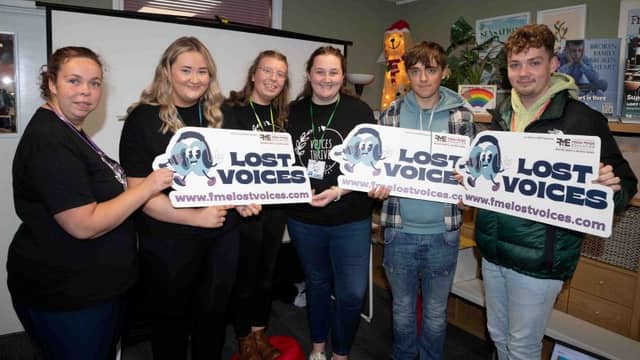

MONDAY night saw the official launch of a pioneering project designed and facilitated in Antrim by young people, designed to help other teenagers cope with the ups and downs of life, including bereavement, loss and emotional distress. The project, based at Fresh Minds Education at Antrim Enterprise Park, kicked off in February and has involved up to 30 participants, mostly from the borough, but also from areas like Belfast, Dunloy and Magherafelt.
MONDAY night saw the official launch of a pioneering project designed and facilitated in Antrim by young people, designed to help other teenagers cope with the ups and downs of life, including bereavement, loss and emotional distress.
The project, based at Fresh Minds Education at Antrim Enterprise Park, kicked off in February and has involved up to 30 participants, mostly from the borough, but also from areas like Belfast, Dunloy and Magherafelt.
The participants, aged 16-19 focused on teen mental health, bereavement, and loss, emotional distress, and suicide to create resources and worked to deliver an online platform for youth leaders, teachers and those who work with teens and young people.
The team created podcasts, art work, user guides and presentations to enable conversations about difficult topics.
The launch came just days after Children and Young People’s Grief Awareness Week.
Since 2015, it has been an important time of the year where Fresh Minds works even harder than usual to raise awareness of and offer recognition to young people who have experienced bereavement.
At Fresh Minds’ Heartspace facility in Greystone, the support and understanding that is offered to children who are experiencing grief and loss, can go a long way to helping them find meaning and purpose through their grief.
It is hoped that the Lost Voices Project can give an all important platform to those who need it and deserve it.
Project lead Jane Adams was born and bred in Antrim and said that teenagers who have been through bereavement find it hard to talk, especially with a person they don't know.
She explained that young people tend to respond positively to support from adults they are familiar with, and have a trusting connection with.
Jane added that creative and expressive activities, such as art, music and drama, can help young people to feel less more relaxed about discussing these challenging topics.
And she said that making connections with other bereaved young people can provide great support and understanding.
“This project was designed by and for young people themselves,” she explained.
“It was really organic and authentic and completely led by them.
“There were three main themes which the young people themselves identified.
“The first was more accessibility to resources, the second was the removal of stigma around mental health, bereavement and suicide and the third was the creation of more and new resources by teenagers themselves, rather than being dictated to.”
Among the many activities that the young people involved themselves in were an awards scheme for those who had overcome adversity, with accolades including the Rise Above and Always on my Mind awards.
The young people also worked on becoming facilitators and hosts and recorded a number of podcasts and created artwork to accompany them.
The participants also delivered treats and talks to other groups of teenagers and went into schools to spread a message of hope and link pupils to helpful resources.
The podcasts touch on a range of themes including bereavement through suicide, the need to talk, changes in the environment and family breakdown.
As part of the platform, there is also poetry and a user guide to help signpost people to the relevant information.
Jane said: “The young people repeatedly said that they felt that they were being left out of important conversations.
“They felt as if there was no safe space for them to say what they felt about a range of difficult topics.
“They said that they felt there needed to be more support for bereavement and particularly bereavement through suicide.
“There was a common theme of not being able to access help and if it was available, it was either very expensive or there were long waiting lists
“And the aim of Lost Voices is for those voices to be found, and heard and the aim was that they could reach out to other young people and help them, to overcome their own adversity.”
Jane said that political instability, environmental disaster and the Covid pandemic are all weighing heavily on the minds of young people.
“There is a lot of bad news out there and also a lot of added responsibility on the shoulders of young people.
“A lot is expected of them, and those expectations change as they get older, but no one is telling them how to navigate these issues or offering any support.
“We heard a lot from the young people about how the pandemic left them feeling very isolated and many of them missed out on so much.
“It was a huge added pressure on top of what is already a very difficult time of life. So many things have effected them that they had no say in and there is a feeling of helplessness when other people make decisions for you.”
Jane said it was heartwarming to see the participants grow in confidence.
“These young people were all unknown to each other before they started but they worked together really well.
“Working together, learning new skills and expressing themselves through the arts has been hugely beneficial to them all.
“The arts are vital to the soul and are so important in helping young people express themselves.
“It’s a vital way of helping build confidence and connecting us and the arts need to be accessible to everyone.”
Indeed many of the participants have now become facilitators themselves, running youth mental health workshops and one young person delivered a presentation on Lost Voices to a recent St John Ambulance’s annual youth conference.
Jane added: “A lot of the participants have been really inspired by their work on this project and want to see it extended and continued into the future.
“In 2024 we hope to run a youth bereavement support group to build on the work we have done here.”
The launch event on Monday night included a presentation by the young people, a musical performance assisted by Vicki Kyles from Antrim School of Music, a visit by Linda Warwick from Cruse Bereavement Care and more explanation of the Lost Voices platform and how it can be used.
There was also a memory tree, which featured baubles inscribed with the names of lost loved ones.
And of course, there was pizza, ice cream and sparklers to round off the evening.
The project was funded by Children in Need and The Arts Council.
Fresh Minds Education was founded by Aine and Adam Wallace.
All their work is based on the AMBER approach - which stands for Anchor, Move, Breathe, Express and Relax, developed here in Antrim.
The method is named after the couple’s daughter, who was stillborn.
In the first year of the pandemic, the charity Fresh Minds Education devoted itself entirely to translating their curriculum for online engagement and it reached 1,500 individuals online in its first year alone.
Fresh Minds’ suicide prevention and intervention curriculum has been used by the Public Health Agency to assist them in meeting the unmet need for easily accessible training that inspires help seeking and saves lives locally.
The organisation offers ‘Training of Trainers’ to individuals, organisations and businesses who want to proactively save more lives.
With the number of people dealing with mental health issues rising steadily, and with waiting lists longer than ever, the organisation says it’s now more important than ever for people to access the kind of support they need, when they need it, locally.
FME provides in-person resilience training and mental health support to children, young people, families, and teachers.
They are one of the few charities that offer face-to-face services in Antrim, crucial for building trust and rapport with the people they help.
They provide suicide prevention training courses and act as connectors to other mental health support organisations.
Aine said: “I am so proud of Jane for the work that she has done and of course of all the young people.
“Sometimes older people, including parents and teachers, do not know how to react or speak to children and teenagers about loss, and these young people have told us exactly what they need and want and how they feel.
“They have opened and informed a very important conversation and they are fully a part of it.
“Young people need safe spaces in which to express themselves and these participants have not only done this, but are giving us all the tools with which to help others, whether at home, in schools or in the community.
“By the end of the project is was fantastic to see the young people walk into the Heartspace, treat it as a safe place, make hot drinks for each other, chat like old friends and facilitate their own groups.
“There is no expectation, there is no right or wrong way to feel, it’s OK to be OK, it’s OK to not be OK.”
Aine, who used to be a youth worker in north and west Belfast said: “Life doesn’t discriminate, people think these problems are in far away places but mental health issues are everywhere and we do deal with young teenagers who have attempted suicide and self-injury.
“These young people need to talk and express themselves and be a part of the conversation.”
Aine and Jane have thanked all the local businesses and individuals who have donated their time, expertise and sponsorship to the project.
And what did the young Antrim people themselves have to say?
Aaliyah (19): “I’m involved in this project because I want to be able to make new friends and learn new things, create and explore new ideas a experiences. I feel at mind and at peace when I play my favourite sport, football.”
Hannah (19): “I am involved in this project because I want to help make a difference in young people lives and make new friends!”
Katie (19): “I am involved in this project as I want to make a difference for children and young people and their mental health and how best to support them when they need it. I feel really good when I am doing crocheting as it’s my most favourite thing to do as it calms me down right away.”
Aoife (16): “I am taking part in this organisation because I enjoy expanding my knowledge on mental health and listening to other people and their experiences. Listening to music helps calm me and allows me to feel stress free.”
Cody (17): “I’m taking part in this project as I’ve always been enthusiastic about improving mental health and this project improved my ways of support for myself and others. Just a deep breath while playing or listening to music always helps me settle down.”