

Chicken sheds refused, but sheep farmer receives deferral
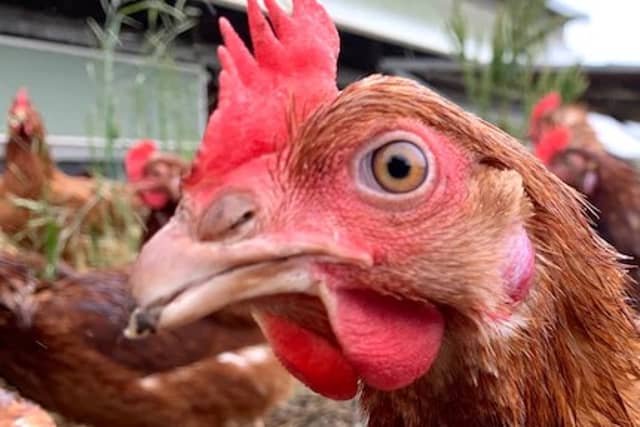

TWO separate proposals for chicken sheds have been refused planning permission - while an decision on agricultural buildings in a different part of the borough has been deferred.
P&H Hanna were the applicants for the two proposed free range broiler houses, for up to 39.8k free range broilers, together with ancillary building, swale, meal bins, new concrete apron, new access onto Burnside Road in Dunadry, and landscaping.
Criteria requires any new buildings to be situated beside existing farm buildings, however the proposed buildings are situated over 240m from the existing buildings on the farm at 35 Burnside Road.
A report before the Planning Committee of Antrim and Newtownabbey Borough Council this week said: “The agent has outlined in the Supporting Statement that the siting is essential to the functioning of the farm as the proposal is a free-range site and therefore by definition cannot be sited beside the existing farm buildings. The agent also highlighted the need to ensure adequate biosecurity and that an area removed from the main farm assists is required to avoid cross contamination and cross transfer of disease with other kinds of livestock.
“An additional Supporting Letter was submitted from the applicant and it indicates that for biosecurity reasons and to protect both poultry and human health, new indoor and free-range broiler units should be sited away from existing farm enterprises and, ideally, served by a dedicated access lane.
The meeting heard that another six letters of objection had been received. Planning officers recommended refusal, as they said the proposal is contrary to policy, not being sited beside the existing farm buildings. It was onsidered that the proposal would integrate appropriately with the surrounding landscape and would not result in adverse impacts on neighbouring properties, or prejudice road safety.
Agent for the applicant, David McMeekin, citing advice from DAERA, said that an exception to the policy was being sought for biosecurity, to avoid disease transfer between free-range chickens and other farm animals. He asked for a deferral so that council could consult a veterinarian on the need for separation between intensive poultry and livestock ‘to check the veracity of what we are maintaining’.
Hugo Hanna said that he ran a small family farm and wished to diversify into free-range poultry, in order to make it economically viable. He added that with each chicken needing 1m square of trees, vegetation or scrubs, ten acres of green space was needed around the sheds, not just abutting them, and that there was not enough room on the original yard. Mr Hanna said that with beef cattle, sheep, horses and a small arable operation on the original yard, separation was needed.
“Horses, sheep and cattle are known carriers of salmonella, which would be a food safety risk, all chickens are tested for salmonella. With avian influenza, transmission is increased by having additional livestock nearby, grain and hay storage can attract vermin and having yards close together increases that risk, the best known prevention is biosecurity and separating out the yards.”
Sinn Fein Councillor Rosie Kinnear said that she was ‘no farmer, no scientist’ but ‘it all seems very straightforward’.
Barry Diamond, Deputy Director of Planning and Building Control said that for new buildings to be sited away from the original farm had to be ‘for good reason for doing so’.
“No document says there needs to be a 240m separation.” he said, adding that there had been a lot of engagement with the agent since January.
“I don't think this comes as a surprise to the agent, we haven't rushed to get the application in, we know the importance of the agrifood sector, enough opportunity has been given, the committee can direct me if they feel a further opportunity is warranted.”
DUP Councillor Jeannie Archibald-Brown asked what evidence would be required for the exemption.
Mr Diamond conceded the advice from DAERA was to physical separation, but expert opinion cited no minimum distance, adding that the policy stated that a new building must be clustered in the original farm.
“There is no evidence to justify a distance of 240m at its closest point, the sheds go much further beyond that.” he said,
DUP Councillor Sam Flanagan said he would reverse the question, asking: “How do we determine that is an unreasonable distance?”
Mr Diamond said that the applicant must demonstrate why such a distance was needed.
Ulster Unionist Councillor asked if the new farm was not hydrologically linked to the existing or neighbouring farms, while his party colleague Stephen Cosgrove observed ‘no book is going to tell you’ about maximum and minimum distances.
Mr Diamond said: “We can depart from policy, but we must be clear why we are doing this, with evidence that supports it. Policy says farms should be clustered, unless there is an exception.”
Sinn Fein Councillor Anne Marie Logue asked about the first speaker’s suggestion of a veterinary report and asked if the item could be deferred on the basis of receiving this information.
Mr Diamond replied: “From an officer’s point of view, this application is almost a year old, the siting of buildings has been well known issue since January 2026, we have brought it in front of committtee because we dont think we are progressing, and because we recognise the importance of the agrifood industry.”
The recommendation to refuse was proposed, seconded and approved by ten votes in favour and one abstention.
Also refused was an application for a proposed organic free range poultry sheds on Sawmill Road, Ballyclare to house 9000 laying hens, with two feed bins, manure storage shed, underground effluent tank, PV panels, associated site works including yard areas, drainage, swale, and lane and a proposed new entrance.
Ten neighbouring properties were notified, and eight letters of representation were received. There were concerns about the siting of buildings away from applicant’s farm yard, impact on residential amenity, flooding concerns, impact on water quality, runoff to Lough Neagh, biodiversity concerns, increase in large traffic vehicles, increase in pests, artificial lighting concerns; and misleading information.
A report before the committee said: “The principle of development has not been established as it has not been demonstrated that there are no other buildings available on the holding that can be used to meet the operational need and the proposed sheds are not sited beside existing farm buildings. The proposed sheds could not integrate into the surrounding area as they would contribute to urban sprawl and are not agricultural in nature. It is considered that mitigation measures could be put in place so as not to compromise the amenity of neighbouring residents. It is considered that mitigation measures could be put in place so as not to compromise natural heritage; and there is no flood risk associated with the proposed development .”
However the proposed erection of two agricultural sheds with proposed new access lane at Cranfield Corner was deferred. Eleven neighbouring properties were notified of the application, and three letters of objection were received from three neighbour notified properties. Concerns included visual impact and residential amenity concerns including location, farm vehicle movements, odour, loss of sunlight, dust, lighting, noise and general disturbance. There were also concerns about the intended use of proposed sheds and impact on Lough Neagh and child safety concerns.
A report before the committee said: “The principle of development has not been established as it has not been demonstrated that there are no other buildings available on the holding that can be used to meet the operational need and the proposed sheds are not sited beside existing farm buildings. The proposed sheds could not integrate into the surrounding area as they would contribute to urban sprawl and are not agricultural in nature. It is considered that mitigation measures could be put in place so as not to compromise the amenity of neighbouring residents.
“It is considered that mitigation measures could be put in place so as not to compromise natural heritage; and there is no flood risk associated with the proposed development.”
The applicant told the committee that since the passing of her father in 2018 and as the eldest of six children and raising her own young family, she had kept the sheep farming and breeding flock going, through the use of temporary shipping containers, which also housed feed, veterinary and farm supplies.
She said that the existing property suggested as the location for the farm was her mother’s home, which did not have the infrastructure to support the proposal, inviting council officers for a site visit. She also questioned how a young farmer could get started out under the policies under which the council planners were operating. In terms of urban sprawl, she pointed to previously approved engineering workshop in nearby Creggan.
Alliance Councillor Tom Campbell proposed the recommendation to approve but found no seconder. UUP Councillor Stephen Cosgrove proposed a deferral for a month. While Mr Diamond cautioned again cautioned against urban sprawl and said the applicant would have to prove why the sheds needed to be built at the location, this was seconded and approved by a vote of eight in favour, and three against.