

No changes proposed to council grass-cutting criteria
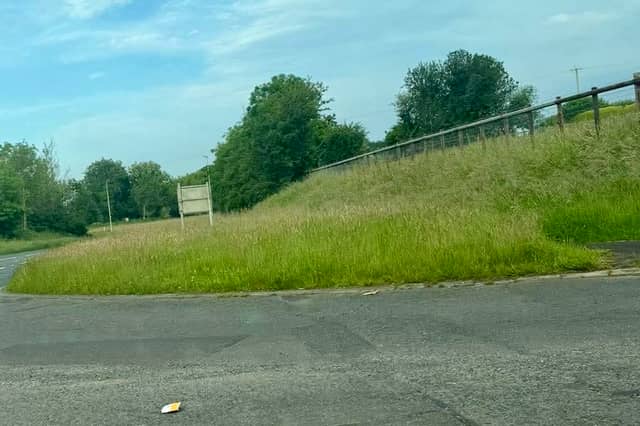

Councillors are set to discuss grass cutting at a meeting this week.
A report has revealed that Antrim and Newtownabbey Borough Council has saved £100,000 following a reduction in grass-cutting, and there are no plans to increase the service.
The Operations Committee was due to hear on Monday night that previous reports to the Operations Committee have outlined the respective grass-cutting responsibilities of council and the Department for Infrastructure (DfI), together with ‘the challenges arising from changes to DfI's maintenance regime’. In recent years, DfI has ‘significantly reduced’ grass-cutting activities on its estate (including roadside verges, splaylines and other public land owned by DfI) due to budgetary pressures and ‘the implementation of biodiversity- focused land management practices’.
A report due before the committee on Monday said that DfI verge maintenance 'is now generally limited to visibility splays and road safety requirements, with grass- cutting in many locations limited to a 1.1-metre swathe undertaken twice annually'.
The document continued: "This has impacted public perceptions of maintenance standards across several prominent verges and open spaces throughout the Borough, which DfI is responsible for. In that same timeframe, council has progressively extended its maintenance programme to include several DfI-owned and other non-council-owned locations. This approach was intended to maintain the appearance of key gateway sites, roadside verges and amenity areas, ensuring that important locations continued to meet community expectations and contribute positively to the overall presentation of the Borough.
"Agreed criteria ensures that council's existing commitment to maintaining third- party land does not continue to expand, thereby avoiding additional, unsustainable, resource pressures and ongoing maintenance liabilities. Locations should include council-owned flowerbeds, sculptures, tree planting, public realm improvements or other significant environmental enhancements. This ensures that maintenance resources support areas where council has made a direct investment in improving the local environment.
“A 10-metre distance on either side of town and village signage, where traffic regulations permit, means grass cutting may be undertaken within a 10-metre area on either side of town and village signage, where traffic regulations permit. This approach helps maintain attractive and welcoming gateways into towns and villages, creating a positive first impression. Each location must be supported by a Memorandum of Understanding with DfI. Such agreements provide clarity regarding ownership, maintenance responsibilities and accountability, ensuring an agreed framework for service delivery and ongoing site management.”
Historically, council incurred annual costs of approximately £80,000 through the urban grass-cutting arrangement with DfI, together with an estimated £60,000 per annum associated with maintaining the 34 DfI-owned locations across the Borough. Following the cessation of the urban grass-cutting arrangement and the subsequent reduction in maintenance activities on non-council-owned land, council has realised efficiencies of approximately £100,000, ‘supporting effective delivery of core council services’.
The report said: "These efficiencies have been realised while retaining maintenance at several strategically important locations that meet the agreed criteria and make a significant contribution to the appearance of towns, villages and key gateway sites. The revised approach has enabled council to concentrate resources on its core estate and priority locations, ensuring that available budgets are utilised effectively while continuing to support a high-quality.
"The current annual cost of the council’s mobile grass-cutting and grounds maintenance service is approximately £781,029. This figure relates to council’s mobile grass-cutting operations and does not include the cost of grass-cutting and grounds maintenance activities undertaken across the council estate. The expenditure noted include direct staffing costs associated with council’s in-house workforce, an apportionment of fuel, plant and machinery operating costs and expenditure relating to external contractors engaged to undertake specialist or supplementary maintenance works. Given the scale of the existing maintenance programme and associated budget commitments, the inclusion of additional sites within the grass-cutting schedule would result in increased operational demands and ongoing maintenance obligations. Any future expansion of the programme would therefore require careful consideration of resource availability, service priorities and value for money."
As part of the review of grass-cutting arrangements, the report said that consideration has been given to the implications of council undertaking maintenance activities on land that is not within its ownership or direct control.
The report said: "While council has historically maintained several non-council-owned locations in order to support the overall appearance and presentation of the Borough, such arrangements can present legal, operational, financial and governance challenges where responsibilities for ownership, insurance, inspection, maintenance and risk management are not formally defined.
"These considerations have been brought into sharper focus by a recent legal claim relating to an alleged incident on third-party land (not owned by council). The matter remains subject to ongoing legal proceedings and no liability has been determined; the case does however highlight the potential risks associated with undertaking maintenance activities on land outside council-ownership or formalised control.
"The review has therefore considered not only the operational and resource implications of maintaining non-council-owned land, but also the wider governance and risk considerations arising from such arrangements. Particular regard has been given to the potential precedent that could be created through the continued inclusion of additional third-party sites, which may lead to increased requests from external landowners and public bodies for council to assume maintenance responsibilities.
"The findings of the review reinforce the importance of formal agreements, including Memoranda of Understanding where appropriate, to clearly define ownership, responsibilities and accountability. This approach supports sound governance, effective asset management and the prudent deployment of council resources, whilst ensuring maintenance activity remains focused on locations where council has a clear role, responsibility and demonstrable community benefit.
"The review has confirmed that the current maintenance arrangements, based on the previously agreed criteria, enables council to maintain strategically important locations while ensuring that financial, human and physical resources remain focused on the core council estate. The approach has reduced expenditure associated with non-council-owned land, delivered operational efficiencies and minimised additional staffing and maintenance demands. As a result, council has been able to target available resources towards priority locations while maintaining high standards across its own assets. Continued adherence to the agreed criteria will support sustainable service delivery, effective resource management and the ongoing provision of quality environments."